The honest time difference
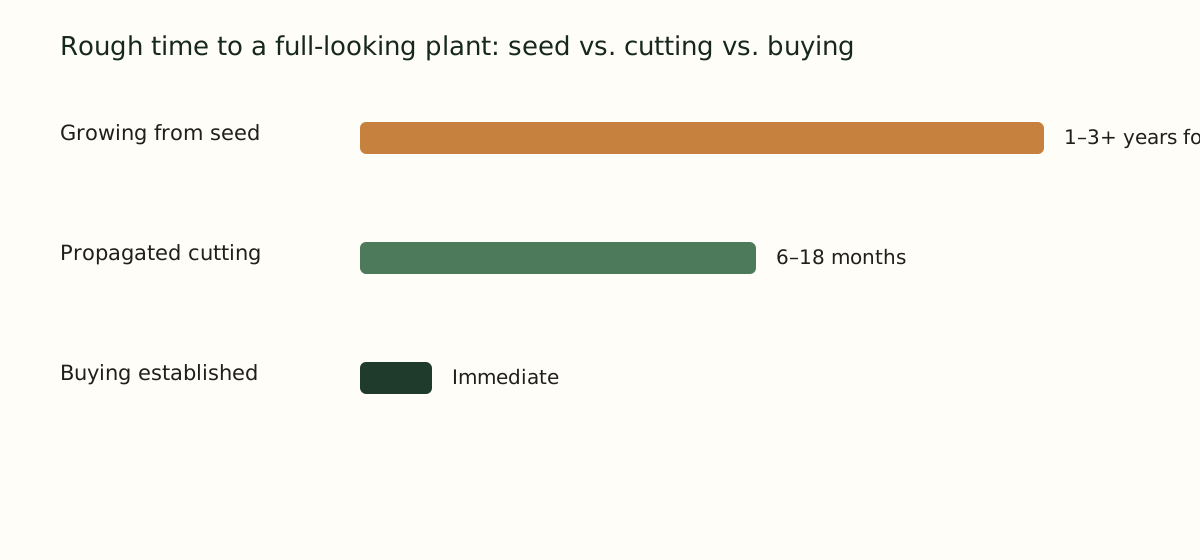
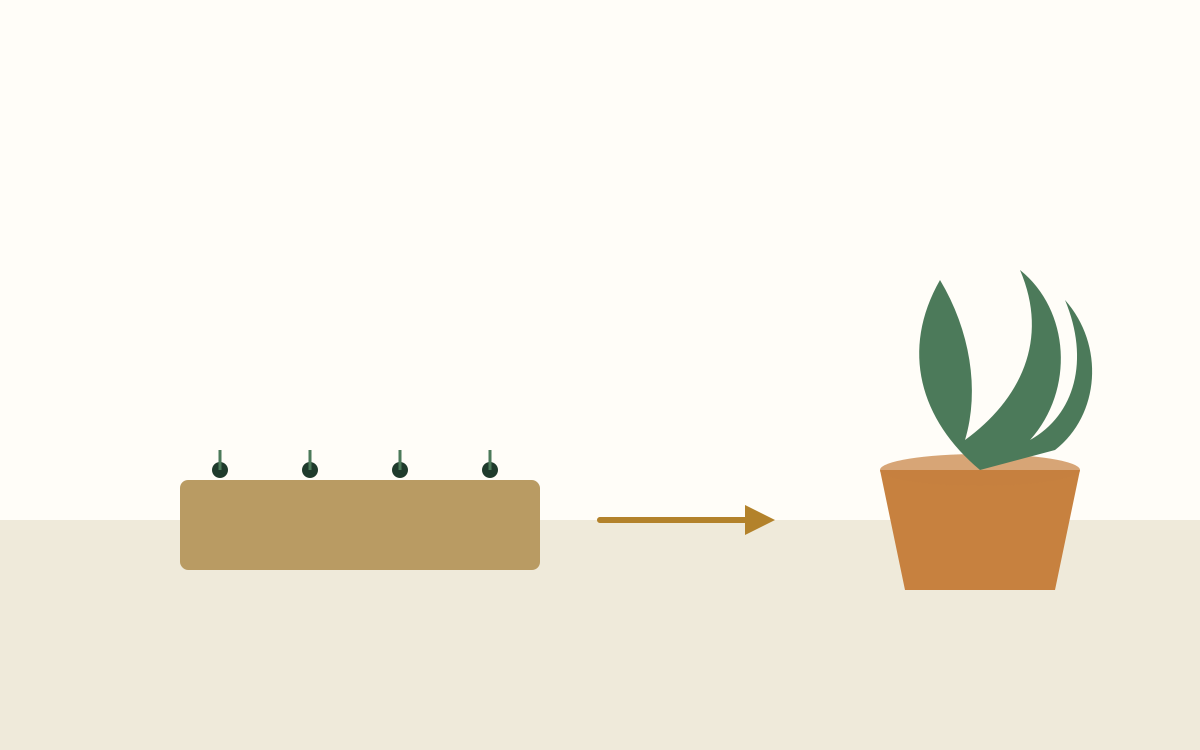
This is the single biggest factor most people underestimate when weighing these two approaches against each other. Many popular houseplants take one to three years or longer to grow from seed into anything resembling the mature, full plant you'd see in a shop, and some slow-growing species take considerably longer than that — a seed-grown snake plant, for instance, can take several years to reach the size commonly sold at a garden center. A propagated cutting, by contrast, often reaches a reasonably established size within six to eighteen months since it's starting from existing plant tissue, complete with a head start on stem and leaf structure, rather than a single seed. Buying an already mature plant skips this entire timeline, giving you an immediate, full-looking result the moment you bring it home. None of these approaches is objectively "better" — the right choice depends heavily on how much you value immediate visual payoff versus enjoying the process itself as a hobby in its own right.
Cost comparison
| Approach | Typical upfront cost | Ongoing cost |
|---|---|---|
| Growing from seed | Very low ($2–8 per seed packet, often dozens of seeds) | Seed-starting mix, containers, possibly a grow light |
| Propagated cutting | Free (from your own or a friend's plant) or low (purchased cuttings) | Minimal — same ongoing care as any plant |
| Buying established | Moderate to high, scales with plant size and rarity | Same ongoing care as any plant |
Seed starting is by far the cheapest way to end up with a large number of plants, since a single seed packet often contains far more seeds than most people need for personal use — genuinely useful if you want many plants of the same species, or if you're growing to give away or trade with other plant enthusiasts in a local plant-swap community. For a single specimen of a specific, already-mature-looking plant, though, the cost difference narrows considerably once you factor in the time, seed-starting supplies like trays and heat mats, and the real risk that not every seed will germinate successfully, meaning your effective per-plant cost can climb well past the sticker price on the seed packet itself.
Which houseplants actually make sense to grow from seed
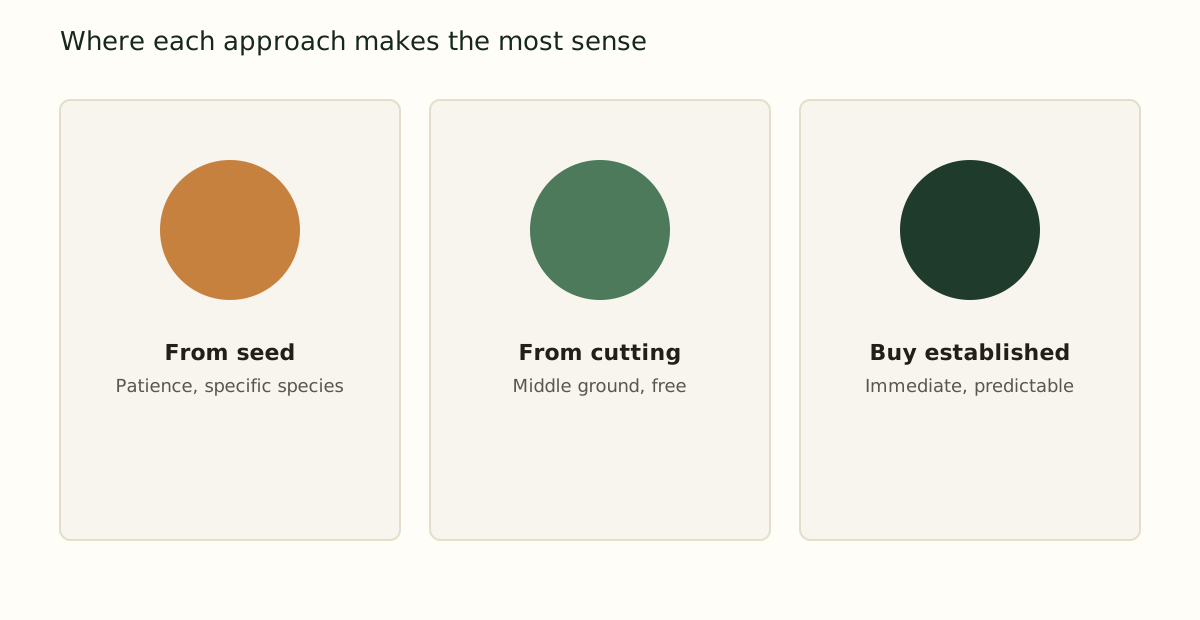
Many of the most popular houseplants — pothos, philodendron, most snake plant cultivars, and monstera among them — are propagated commercially almost entirely through cuttings or tissue culture rather than seed, and seeds for these species are either difficult to find, don't reliably grow true to the parent plant's characteristics, or are simply not commercially practical to start at home given how much slower and less predictable the process would be compared to standard commercial propagation methods. Seed starting makes more sense for a different category of houseplants, generally ones where seed is the standard, widely available commercial propagation method rather than an unusual workaround:
- Succulents and cacti — many species are genuinely accessible to grow from seed, though slow, often taking a year or more just to reach a small, recognizable size.
- Herbs and edible houseplants — basil, mint, and similar kitchen plants grow relatively quickly from seed and reach a usable, harvestable size within weeks to a couple of months, making them one of the most immediately rewarding seed-starting categories for a beginner.
- Flowering annuals grown as houseplants, including some varieties marketed specifically for indoor growing, which are often bred to prioritize reasonably fast germination and growth over the slower pace typical of many perennial foliage houseplants.
- Citrus and avocado, popular novelty seed-starting projects, though these typically grow into interesting foliage plants rather than fruit-producing specimens indoors, since most need much larger scale, specific pollination, and years of maturity to fruit.
Seed starting basics if you decide to try it
- Check the specific germination requirements for your chosen species before you begin — some seeds need darkness to germinate, others need light exposure, and some benefit from being soaked or lightly scarified (nicked) before planting to help water penetrate a hard seed coat.
- Use a seed-starting mix rather than standard potting soil, since seed-starting mixes are finer-textured and better suited to the delicate early root systems of germinating seeds than a chunkier standard potting blend.
- Maintain consistent moisture without waterlogging the seed-starting mix — a humidity dome or loosely placed plastic wrap over the tray helps maintain the steady moisture most seeds need to germinate reliably without drying out between waterings.
- Provide adequate light once seedlings emerge — a bright windowsill works for some species, but a small grow light produces more consistent, reliable results for most, since seedling light needs are often higher than people expect coming from general houseplant care experience.
- Thin overcrowded seedlings if multiple seeds germinate close together in the same cell or section of tray, since crowded seedlings compete for light, water, and nutrients and generally grow noticeably weaker as a result compared to seedlings given adequate individual space.
- Be patient — germination alone can take anywhere from a few days to several weeks depending on species and conditions, and that's before any meaningful top growth even begins to appear above the soil line.
Why seed starting is harder than it sounds
Beyond the raw time investment, seed starting introduces several points of failure that simply don't exist when you buy an already-established plant or root a cutting from mature plant tissue that's already proven it can grow successfully. Germination rates vary widely by species and seed freshness — older seed, seed stored improperly, or seed from a less reputable source can have germination rates well below what's printed on the packet, meaning a portion of your effort may produce nothing at all regardless of how carefully you follow every instruction correctly. Seedlings are also considerably more fragile than established plants or even rooted cuttings: damping off, a fungal condition that causes seedlings to suddenly collapse and die at the soil line almost overnight, is a common cause of seed-starting failure that has no real equivalent risk for mature plants with established, more resilient root systems. Temperature and humidity requirements for germination are often narrower and more specific than the care requirements of the same plant once mature, meaning a windowsill that's perfectly fine for an adult plant of a given species might be too cool or too dry for that same species' seeds to germinate reliably in the first place.
The role of environmental control
Serious seed starters often use equipment that goes well beyond what's needed for ongoing houseplant care — heat mats to maintain consistent soil temperature for germination, humidity domes to prevent seedlings from drying out during their most vulnerable early growth stage, and supplemental grow lights positioned much closer to the plant than would be appropriate for a mature specimen. This equipment isn't strictly required for every species, but its absence is a common reason seed-starting attempts underperform compared to the results shown in gardening media, where these controlled conditions are typically assumed even when not explicitly mentioned. A beginner working with just a sunny windowsill and no additional equipment should expect meaningfully lower germination and survival rates than someone using a proper seed-starting setup, which is worth factoring into a first attempt so early setbacks don't feel like a personal failure rather than a normal part of the learning process.
What to look for when buying an established plant
If you decide buying an established plant is the right call for your situation, a few checks help you avoid bringing home a plant that's already struggling behind an attractive display:
- Check the soil moisture and roots if possible before purchasing — soil that's been kept too wet for too long at a retail location is a common issue, and roots circling visibly at the drainage holes suggest the plant may need repotting fairly soon after purchase.
- Inspect leaves closely for pests, particularly the undersides, checking for tiny webbing, sticky residue, or small moving insects before bringing a new plant home near your existing collection, since an infested new arrival can quickly spread pests to already-established plants.
- Look for even, consistent leaf color without significant yellowing, browning, or unusual spotting, which can indicate the plant has been stressed at the retail location, possibly from inconsistent watering or poor light while on display.
- Consider the season before transporting a new plant — plants purchased and transported during extreme cold or heat can suffer real temperature shock during the trip home, even if they looked perfectly healthy inside the store.
The middle ground: propagated cuttings
For many popular houseplants, propagating from a cutting — your own, a friend's, or one purchased specifically for propagation — offers a genuine middle ground between the patience required for seed starting and the cost of buying a large, mature plant. See our full propagation guide for the general process, which typically produces a reasonably established plant faster than seed starting while costing less than buying an equivalent mature specimen. This middle path also comes with an advantage neither seed starting nor buying fully replicates: a cutting taken from a plant you already own, or from a friend's healthy specimen, guarantees you know exactly what conditions produced that plant's characteristics, since you're propagating from proven, known genetics rather than the more variable outcomes seed starting can sometimes produce, or the unknown growing history of a plant purchased from a retailer.
Making the decision for your situation
If you want an immediate, predictable result and don't mind paying more for it, buying an established plant is the straightforward choice. If you enjoy the process itself, don't mind waiting, and are working with a species that genuinely grows well from seed, seed starting can be a rewarding, low-cost hobby in its own right, separate from simply wanting a finished houseplant quickly — many dedicated seed-starters describe the process itself, watching the first true leaves emerge and tracking growth over months, as the actual appeal rather than a means to an end. If you fall somewhere in between — wanting a lower-cost option without a multi-year wait, and working with a plant that propagates well from cuttings — that middle path is often the most practical choice for the majority of common houseplant species most beginners are likely to encounter.