Why humidity matters for some plants more than others
Humidity is a measure of how much moisture is present in the air relative to how much it could hold at a given temperature. Plants lose water through tiny pores in their leaves in a process called transpiration, and the surrounding air's humidity level affects how fast that water loss happens — dry air pulls moisture from leaves faster than humid air does. Plants native to tropical rainforests, where humidity regularly sits above 60–70%, evolved in consistently moist air and often show stress when kept in the much drier air typical of heated or air-conditioned homes, which frequently sits between 30–40% humidity. Plants native to arid or semi-arid environments, by contrast, are adapted to low humidity and generally show no benefit from artificially raising it around them.
This is a genuinely useful distinction to keep firmly in mind before spending money on humidity equipment: humidity is not a universal "more is always better" variable the way people sometimes casually treat it. For a plant that evolved in a desert, artificially raised humidity offers no upside and can slightly increase the risk of fungal problems, while for a plant that evolved in a rainforest understory, the same low humidity that a succulent handles easily can produce real, visible stress within just a couple of weeks.
Which plants actually need higher humidity
| Plant type | Humidity sensitivity | Notes |
|---|---|---|
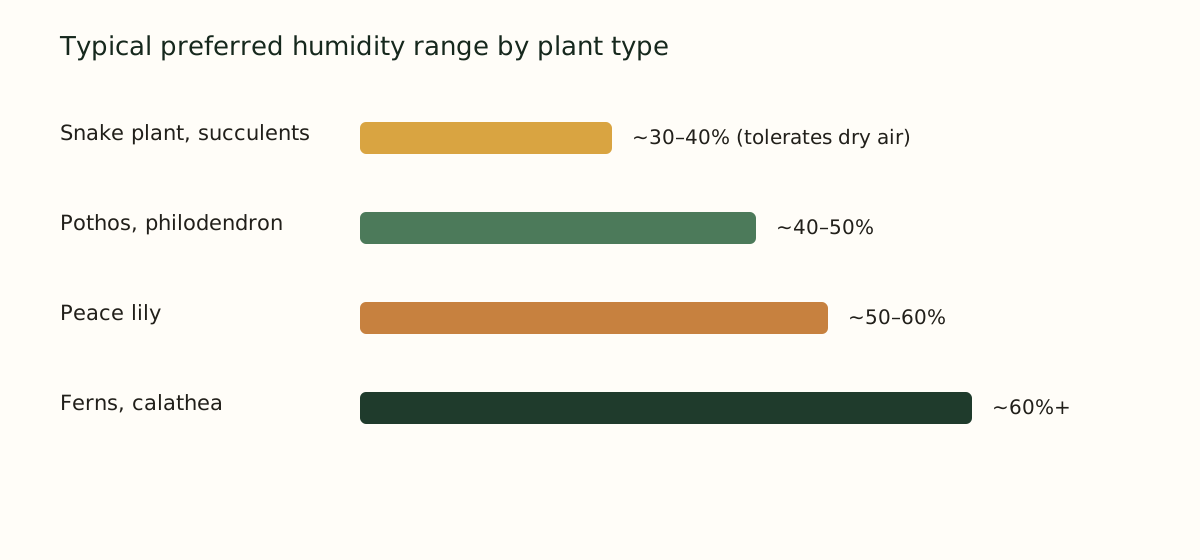
| Ferns, calathea, prayer plants | High | Often show crispy leaf edges in dry indoor air below ~40% |
| Peace lily, alocasia | Moderate | Benefit from higher humidity but tolerate average indoor conditions reasonably well |
| Pothos, philodendron, monstera | Low to moderate | Adaptable across a fairly wide humidity range |
| Snake plant, ZZ plant, succulents, cacti | Minimal | Evolved for dry conditions; extra humidity offers little to no benefit |
Before investing time or money in raising humidity, check whether the specific plant you're concerned about is actually humidity-sensitive. A significant share of popular beginner houseplants tolerate average home humidity just fine, and the visible stress they're showing is more often related to watering habits or available light than to humidity at all, which is worth ruling out first.
Measuring the humidity you actually have
Guessing at humidity is genuinely unreliable — homes with central heating or air conditioning often run drier than people assume, especially in winter. An inexpensive digital hygrometer, often sold combined with a thermometer, gives an accurate relative humidity reading for a specific room and typically costs very little. Placing one near a humidity-sensitive plant for a few days gives you real data instead of a guess, and lets you evaluate whether any humidity-boosting method you try is actually making a measurable difference. Because humidity can vary noticeably between rooms in the same house — a bathroom versus a heated bedroom, for instance — a single hygrometer reading from one part of the home shouldn't be assumed to apply everywhere your plants live.
Realistic ways to raise humidity
Grouping plants together
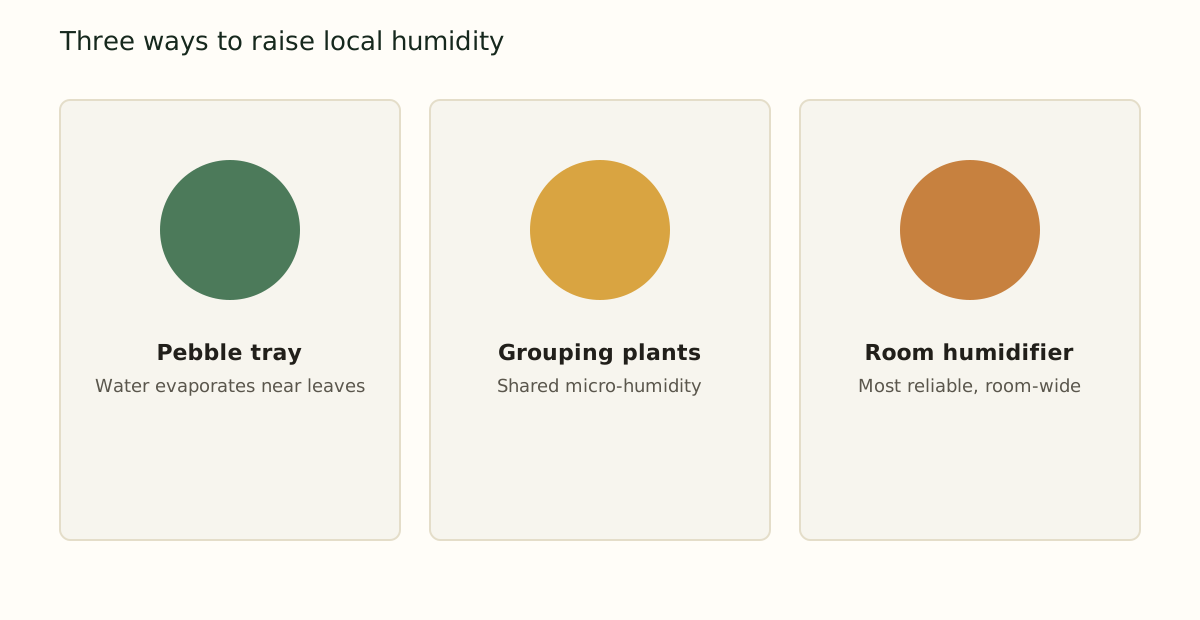
Plants release moisture into the air as they transpire, so clustering several plants closely together creates a small shared pocket of slightly higher humidity than the surrounding room, similar to how a group of plants in a greenhouse maintains more humidity than a single isolated plant standing alone would. This is a low-cost, low-effort method worth trying first, though the overall effect on a room's measured humidity is generally modest.
Pebble trays
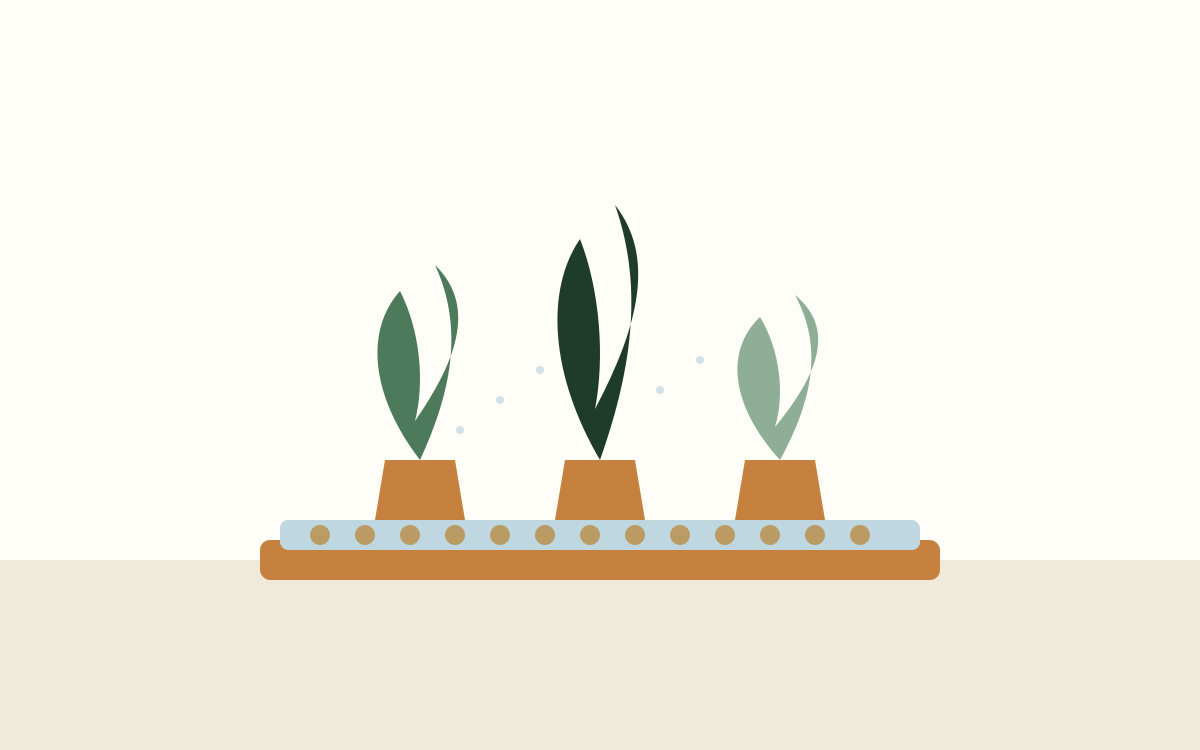
A wide, shallow tray filled with pebbles and a small amount of water, with pots set on top of the pebbles rather than sitting in the water directly, raises humidity in the immediate area around the plant as the water evaporates. This is inexpensive and low-maintenance, though the effect is fairly localized and modest compared to a humidifier.
Room humidifiers
A small electric humidifier is the most reliable and controllable way to raise humidity meaningfully, particularly for a cluster of humidity-sensitive plants in one room. Unlike grouping or pebble trays, a humidifier can be set to maintain a specific target humidity and will actually move the needle on a hygrometer reading, which is worth the investment if you're serious about growing ferns, calathea, or other genuinely humidity-demanding plants indoors.
Methods that don't work as well as people think
Misting leaves directly with a spray bottle is one of the most commonly recommended humidity methods, but its actual effect is brief and localized — the moisture on the leaf surface evaporates within minutes, providing only a very short-lived humidity boost that doesn't meaningfully change the plant's overall growing environment. Frequent misting can also leave water sitting on leaves for extended periods in low-airflow spots, which raises the risk of fungal leaf spot on susceptible plants rather than solving the underlying humidity issue. Misting isn't harmful in moderation, but it shouldn't be relied on as a primary humidity strategy.
Air humidity vs. soil moisture: a common point of confusion
Beginners frequently conflate air humidity with soil moisture, but they're separate variables that affect a plant through entirely different mechanisms. Air humidity affects how quickly a plant loses water through its leaves; soil moisture affects how much water is available at the roots to replace what's lost. A plant can be sitting in appropriately moist soil while still showing humidity-stress symptoms like crispy leaf edges if the surrounding air is very dry, and conversely, a plant in a humid room can still develop root rot if its soil stays too wet for too long. Raising humidity does not reduce a plant's need for correct watering, and watering more frequently does not compensate for low air humidity — the two need to be addressed as genuinely separate care variables, even though a struggling plant showing symptoms doesn't always make it obvious which one is actually the underlying cause.
Balancing humidity against mold and fungal risk
Raising humidity too aggressively, especially in a room with poor air circulation, can create conditions favorable to mold, mildew, and fungal leaf diseases — the same conditions that benefit humidity-loving plants can also benefit the organisms that cause plant disease if taken too far without proper airflow to compensate. A small fan providing gentle air movement in a humidity-boosted plant area helps prevent stagnant, overly damp conditions while still maintaining elevated humidity around the plants themselves throughout the day. Most humidity-sensitive houseplants do well in the 50–60% range; pushing much beyond that indoors, especially without adequate airflow, increases risk without adding much additional benefit for typical foliage plants grown for their leaves rather than blooms. This is also why densely packed plant collections in low-airflow corners sometimes develop fungal issues even when every individual plant's watering and light needs are being met correctly — the room-level humidity and airflow balance matters just as much as any single plant's individual care routine.
Choosing a humidifier: cool mist vs. warm mist vs. ultrasonic
If you decide a humidifier is worth adding to your plant care routine, the main choice is between a few common types on the market, each with different tradeoffs specifically for a plant room:
- Ultrasonic cool-mist humidifiers use a vibrating diaphragm to create a fine mist and are quiet, energy-efficient, and widely available at low cost. Their main downside is the mineral dust mentioned earlier if used with hard tap water, and the visible mist can occasionally make surrounding surfaces feel damp if the unit is oversized for the room.
- Evaporative humidifiers pull room air through a moistened wick or filter and release it back more humid. They tend to self-regulate somewhat, since they release less moisture as the surrounding air already gets more humid, and they don't produce mineral dust, but they require regular filter changes and can be noisier.
- Warm-mist (steam) humidifiers boil water to produce steam, which sterilizes the water in the process, but they use more electricity, pose a minor burn risk around curious pets or children, and raise the room's temperature slightly, which is worth considering in a small space.
For most home plant collections, an ultrasonic cool-mist humidifier paired with filtered or distilled water offers the best overall balance of cost, quiet operation, and genuinely low ongoing maintenance.
Humidity domes and enclosed setups
For plants with especially high humidity needs, or for propagating cuttings that benefit from very high humidity while they develop their first roots, a clear plastic humidity dome or a fully or partially enclosed cabinet-style plant case creates a self-contained high-humidity microclimate that's far more effective than any room-wide method. These setups trap the moisture a plant releases through transpiration inside a small enclosed space, often reaching 70–90% humidity without any additional equipment beyond the enclosure itself. The tradeoff is that enclosed setups need occasional venting to prevent excessive condensation and stagnant air, which otherwise raises the risk of mold or fungal issues, similar to the broader humidity-and-airflow balance described elsewhere in this guide.
Common humidity mistakes to avoid
- Relying on misting as a primary humidity strategy instead of a minor supplement, when its effect is genuinely brief.
- Assuming every "tropical-looking" plant needs high humidity, when many popular tropical houseplants, including pothos and philodendron, are actually quite adaptable to average home humidity.
- Running a humidifier without a hygrometer to confirm it's actually raising humidity to a useful level, rather than just producing visible mist.
- Ignoring airflow while chasing higher humidity, which raises the risk of fungal problems without necessarily helping the plant much further.
- Placing a pebble tray directly under a pot sitting in standing water rather than resting on the pebbles above the waterline — this waterlogs the roots rather than just humidifying the surrounding air.
Seasonal humidity swings
Indoor humidity often drops noticeably during winter months in climates with cold, dry outdoor air and heated indoor spaces, since heating systems warm dry outside air without adding moisture back into it. This is frequently when humidity-sensitive plants show the most visible stress, even if their watering and light conditions haven't changed at all. Checking a hygrometer reading each season, and increasing humidity-boosting efforts specifically during the driest months rather than year-round, is usually a more efficient approach than running a humidifier constantly regardless of season. Air conditioning in summer can produce a similar, if usually milder, drying effect in some climates too, so it's worth checking a hygrometer reading during peak cooling season as well rather than assuming humidity only drops in winter.
Signs humidity is too low for a specific plant
- Crispy, brown leaf edges or tips, especially on ferns, calathea, and prayer plants.
- Leaves that curl inward as a response to moisture loss through the leaf surface.
- Slower growth during the active growing season despite otherwise appropriate watering and light.
- New leaves that emerge smaller, thinner, or more crinkled than expected for the species, sometimes failing to unfurl fully.
These signs overlap somewhat with underwatering and general low light stress, so it's worth ruling those out first before concluding humidity is the underlying cause, particularly if you're already using a hygrometer and know your actual measured humidity level is well within the plant's normally tolerable range for its species.
Terrariums and closed plant cases as an alternative
For collectors who want to grow genuinely humidity-demanding species — certain ferns, mosses, and smaller tropical understory plants — without running a humidifier for an entire room, an enclosed terrarium or glass plant case offers a self-contained way to maintain very high, stable humidity in a small footprint. These setups trap the moisture released by the plants inside through transpiration, often reaching 80% humidity or higher without any additional equipment beyond the enclosure itself and occasional light misting during initial setup. The tradeoff is limited overall size and the ongoing need for periodic venting to prevent excessive condensation from building up on the glass, which can otherwise block light and create overly stagnant, oxygen-poor air inside the sealed enclosure over time. For a beginner curious about growing something beyond the humidity-tolerant species covered elsewhere in this guide, a small tabletop terrarium is a genuinely lower-commitment way to experiment with high-humidity plant care before investing in room-wide humidifier equipment and the associated upkeep that comes with it.