Why "bright indirect light" confuses so many beginners
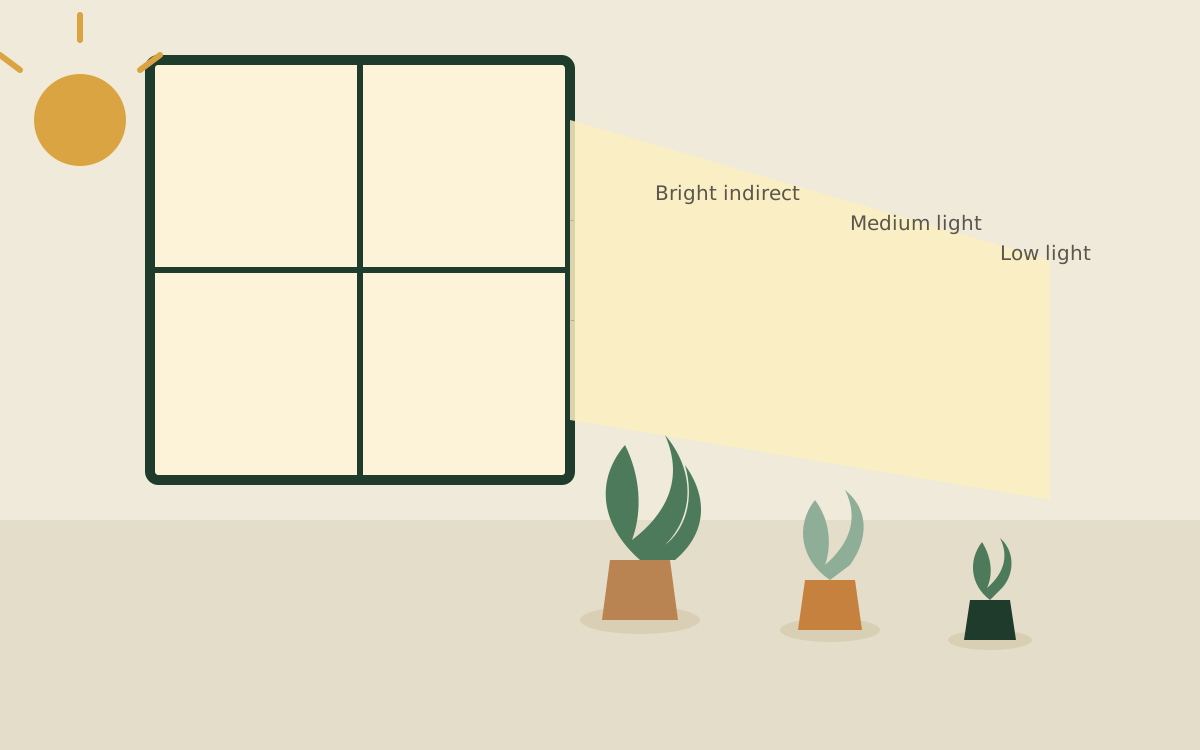
Almost every plant care label uses phrases like "bright indirect light," "partial shade," or "low light tolerant," but these terms describe a spectrum, not a single fixed condition, and they were popularized by growers working in greenhouses with far more consistent, even light than a typical home provides. A spot three feet from an unobstructed south-facing window and a spot three feet from a north-facing window with a tree outside can both get called "bright indirect" in casual conversation, yet the actual light intensity between them can differ several times over.
The fix isn't to memorize more vocabulary. It's to develop a simple, repeatable way to check the actual light in a specific spot in your home, so you can match a plant's needs to reality instead of guessing based on a label.
The hand-shadow test
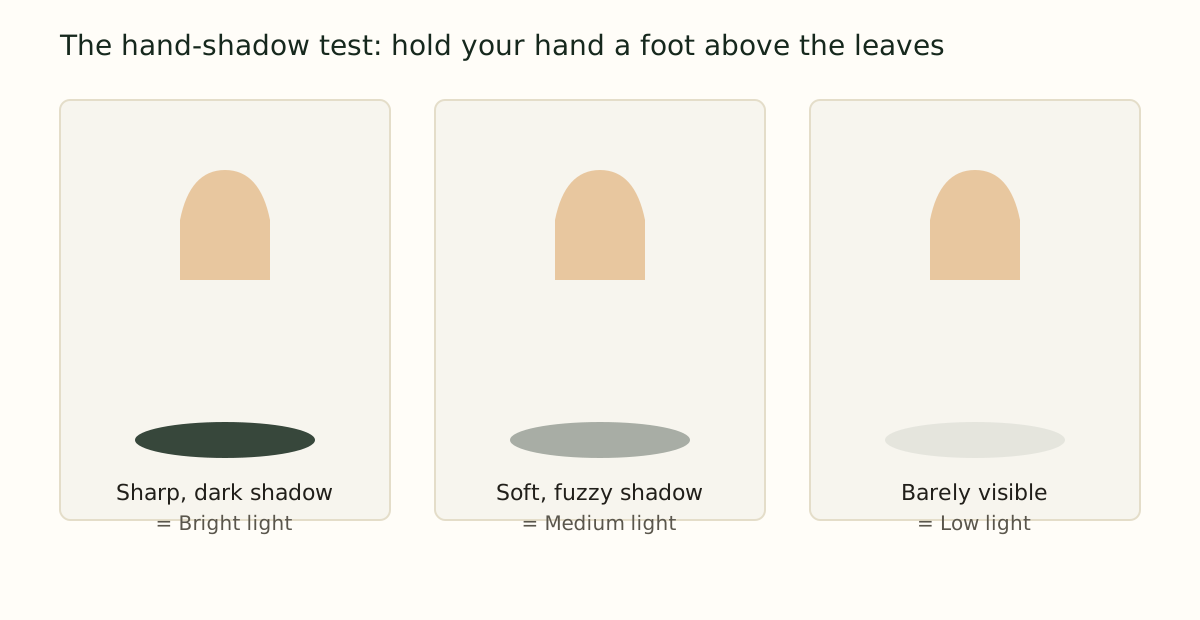
This is the fastest, most reliable low-tech method for gauging light intensity in a specific spot, and it takes about ten seconds. Do it during the brightest part of the day, typically midday, for the most representative reading.
- Stand where the plant would sit, or hold a piece of white paper at the plant's intended height.
- Hold your hand roughly 12 inches above the surface, between the light source and the paper.
- Look at the shadow your hand casts.
A sharp, well-defined shadow with clear edges indicates bright light. A soft, blurry shadow where you can still make out a rough hand shape indicates medium light. If you can barely see a shadow at all, or it disappears entirely, that spot is low light.
Repeat this test at different times of day and across different seasons if you want a fuller, more complete picture — light in the same spot can shift meaningfully between a cloudy December afternoon and a clear June morning.
The five practical light categories
| Category | What it looks like | Typical location |
|---|---|---|
| Direct sun | Sunbeams actually land on the leaves for part of the day; sharp, high-contrast shadow | Right at an unobstructed south or west-facing window |
| Bright indirect | The room is well-lit and a sharp shadow forms, but no direct sunbeam touches the plant | A few feet back from a large, unobstructed window |
| Medium light | The room feels reasonably bright to the eye, shadow is soft-edged | Across the room from a window, or near a smaller/obstructed window |
| Low light | Enough light to read comfortably by, but shadow is faint or absent | Interior hallways, far corners, windowless bathrooms with a skylight |
| Insufficient for most plants | You'd need to turn on a lamp to comfortably read | Closets, deep interior rooms with no natural light |
Almost every popular houseplant sold for beginners is bred or selected to tolerate a range within these categories rather than one exact light level, which is part of why the category system is more useful day to day than trying to measure exact light intensity with specialized equipment.
What window direction actually tells you
Window direction is a genuinely useful starting signal, but it's a starting point, not a guarantee — obstructions like trees, neighboring buildings, awnings, and even curtain sheerness change the real result substantially.
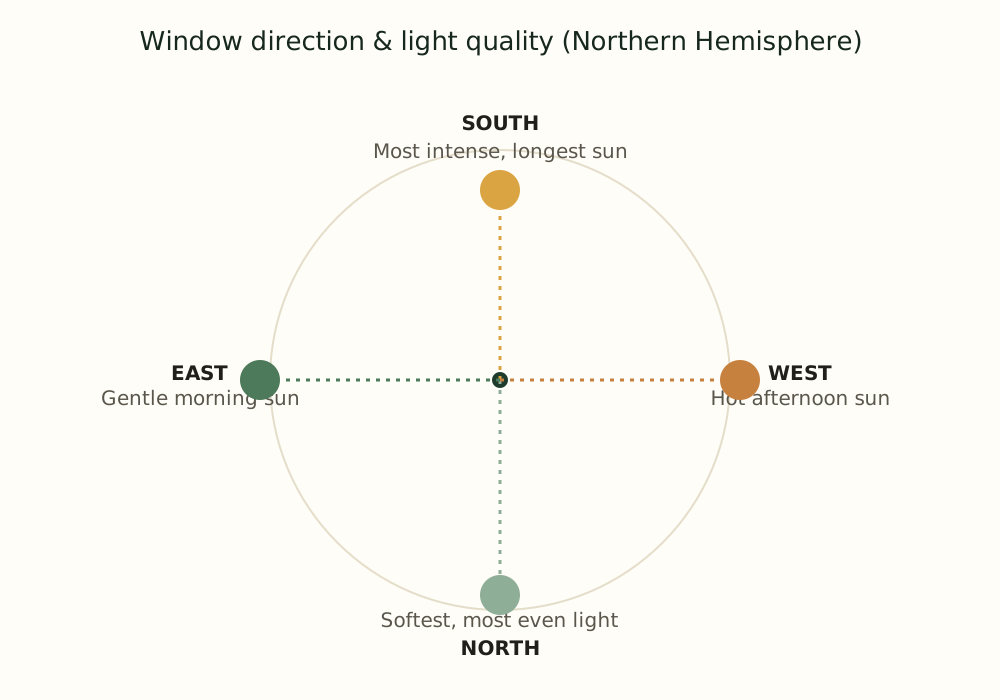
- South-facing windows typically receive the most direct sun for the longest stretch of the day and are the brightest exposure available in most homes.
- West-facing windows get intense, often hot direct sun concentrated in the afternoon and evening.
- East-facing windows get gentler direct sun concentrated in the morning, which many sun-sensitive plants tolerate better than harsher afternoon sun.
- North-facing windows (in the Northern Hemisphere) rarely get direct sun and provide the softest, most consistent light — genuinely "bright indirect" for plants placed close to the glass, but often only medium or low light further into the room.
If you're in the Southern Hemisphere, these direction tendencies flip: north-facing windows get the most intense light and south-facing windows get the softest.
A room-by-room walkthrough
Living rooms
Living rooms often have the largest windows in the home and the widest range of light within a single room — bright right at the glass, dropping to medium or low light within ten feet. This makes them ideal for grouping plants with different needs: sun-lovers near the window, medium-light plants further back, and low-light-tolerant plants in the room's darker corners.
Bedrooms
Bedroom windows are frequently smaller and partially blocked by furniture placement, curtains, or blinds kept closed for sleep, which often pushes actual usable light down a category from what the window direction alone would suggest. Run the shadow test with the curtains in their normal daytime position, not fully open, for an accurate read.
Kitchens
Kitchen windows above sinks are often small but positioned exactly where the light hits a countertop directly, creating a genuinely bright microspot even in an otherwise average kitchen. Open shelving near these windows can be excellent for compact plants that want strong light.
Bathrooms
Bathrooms vary enormously — a windowless bathroom is unsuitable for any plant without supplemental light, while a bathroom with a large window can rival a living room, with the added benefit of higher ambient humidity from showers, which many tropical plants appreciate.
Home offices and interior rooms
Rooms without direct window access, or with only a small or obstructed window, will usually test as low light. This isn't a dead end — several genuinely attractive plants tolerate low light well — but it does rule out sun-loving species regardless of what a plant tag promises about "adaptability."
Why distance from the window matters more than direction
Light intensity falls off sharply with distance from a window — far more sharply than most people intuitively expect. A spot that reads as bright indirect light directly beside a window can drop to medium light just three or four feet back, and to low light by the time you're across a mid-sized room. This is why two plants in the "same room" can have completely different real-world light experiences, and why moving a struggling plant just a few feet closer to a window is often a bigger fix than switching plant species entirely.
How light changes across the year
Day length and the sun's angle shift meaningfully across the seasons, especially at latitudes further from the equator. A spot that qualifies as bright indirect light in June, when the sun sits high in the sky, can drop to medium or even low light in December, when the sun sits lower and daylight hours are shorter. Plants that seem to stall or drop leaves every winter are sometimes responding to nothing more than this seasonal light drop rather than any care mistake. Re-running the shadow test each season, particularly around the winter solstice, helps you catch this shift before a plant shows serious stress.
When to consider a grow light
If a space you want to fill with plants tests as low light or lower, and you specifically want species that need brighter conditions, a supplemental grow light is a reasonable, low-cost solution rather than fighting the room's natural light. A simple full-spectrum LED grow light on a timer for 10–12 hours a day can effectively raise a low-light interior spot to a medium or bright indirect equivalent. This is worth considering before giving up on a favorite plant or a favorite spot in your home.
Using a smartphone light meter app
If you want a number instead of a category, several free smartphone apps use the phone's camera sensor to estimate light intensity in foot-candles or lux. These readings are not lab-accurate — phone sensors are calibrated for photography, not horticulture, and results can vary between devices — but they're precise enough to compare two spots in your home against each other, which is often more useful than an absolute number anyway. As a rough reference point, outdoor full sun measures somewhere around 10,000 foot-candles, a bright indirect spot near a window commonly falls in the 500–1,000 foot-candle range, and a dim interior corner might read well under 100. Use an app reading as a supplement to the hand-shadow test, not a replacement for it — the shadow test remains the faster and more consistent check for most people.
Common light-related mistakes to avoid
- Trusting the plant tag's light description without testing your own space. Tags describe a general range, not your specific room.
- Judging a room's light by how bright it feels to your eyes. Human vision adjusts to available light far more than a camera or a plant does, so a room can feel "bright enough" to you while still testing as medium or low light for plant purposes.
- Assuming a large window guarantees strong light throughout the room. A big window only delivers strong light near itself; light intensity still drops quickly with distance regardless of window size.
- Ignoring seasonal changes. A spot that worked well in summer may need a plant moved closer to the window, or supplemented with a grow light, once winter arrives.
- Assuming all "sun-loving" plants tolerate the same intensity of direct sun. Desert cacti and many succulents handle scorching direct sun; other sun-tolerant plants like some citrus varieties still prefer their most intense midday exposure filtered by a sheer curtain.
Matching plants to the light you actually have
Once you know a spot's real light category, matching plants becomes far more straightforward than working backward from vague, inconsistent care labels found on plant tags:
- Direct sun / bright indirect: succulents, cacti, most citrus, croton, and fiddle leaf fig all tend to do genuinely well.
- Medium light: pothos, philodendron, spider plant, and dracaena are generally forgiving and adaptable across this middle range.
- Low light: snake plant, ZZ plant, and cast iron plant tolerate this dim range better than almost anything else commonly sold at retail.
Buying a plant to fit the light you actually have, rather than buying a plant you like and hoping the light works out, consistently produces better long-term results and far less frustration for beginners working through their first collection. If a spot genuinely can't support the plant you want — say, a fiddle leaf fig in a north-facing interior corner — the more reliable fix is usually a grow light or a different plant, rather than hoping the plant will "adapt" over time on its own. Some adaptation does happen; a plant moved from bright to lower light can gradually adjust its internal leaf structure over weeks or months to capture light more efficiently, but this adjustment has real limits, and pushing a high-light species too far into low-light territory usually ends in slow decline rather than successful, lasting adaptation.
It's also worth reassessing a room's plants together rather than one at a time. A living room with one bright window often supports a small cluster of sun-loving plants directly on the sill, a middle band of medium-light plants a few feet back, and a low-light-tolerant plant or two in the room's far corner — turning a single light gradient into three genuinely usable zones instead of forcing every plant in the room to fit one uniform light category.
Dedicated light meters vs. smartphone apps for serious growers
For anyone who wants a more precise reading than the shadow test provides, dedicated plant light meters — small handheld devices distinct from smartphone camera sensors — are calibrated specifically for horticultural use and generally give more consistent, repeatable results than a phone app relying on a camera sensor built for photography rather than measuring usable plant light directly. These are inexpensive and simple to use: hold the sensor at leaf height in the spot you're evaluating and read the displayed value, usually in foot-candles or a simplified 1–5 "plant light" scale on consumer models designed for home growers. They're genuinely optional for casual houseplant care, but if you're managing a larger collection with several borderline spots, or trying to compare two rooms precisely rather than just relatively, a dedicated meter removes the ambiguity that both the shadow test and a repurposed camera sensor inevitably carry into the reading. For most single-room, casual setups, though, the free shadow test remains entirely sufficient, and a meter is a nice-to-have upgrade rather than a genuine necessity for getting light right.