What "low light" actually means for a plant
Low light, as covered in our room-by-room light guide, describes a spot bright enough to read comfortably in but where a hand-shadow test produces only a faint, indistinct shadow. It's meaningfully dimmer than "bright indirect light," and genuinely low-light-tolerant plants are a small subset of the houseplants sold at typical garden centers — most popular houseplants marketed as adaptable still perform noticeably better in medium light than in true low light, even if they can survive there for a while.
It's worth being precise about this distinction because a plant that merely "tolerates" low light and one that genuinely thrives in it are different experiences to live with. A tolerant plant may survive for months in a dark corner but grow slowly, stretch toward any available light, and never look particularly full or healthy. The plants on this list are chosen specifically because they maintain reasonable form and health in low light, not just technical survival.
It also helps to distinguish "low light" from "no light." Every plant on this list still needs some ambient natural or artificial light to photosynthesize — none of them can survive indefinitely in a completely dark closet or windowless storage room with the lights off most of the day. "Low light tolerant" means capable of sustaining itself on the modest, indirect light typical of an interior room during daytime hours, not capable of surviving without light altogether.
The most reliably low-light-tolerant plants
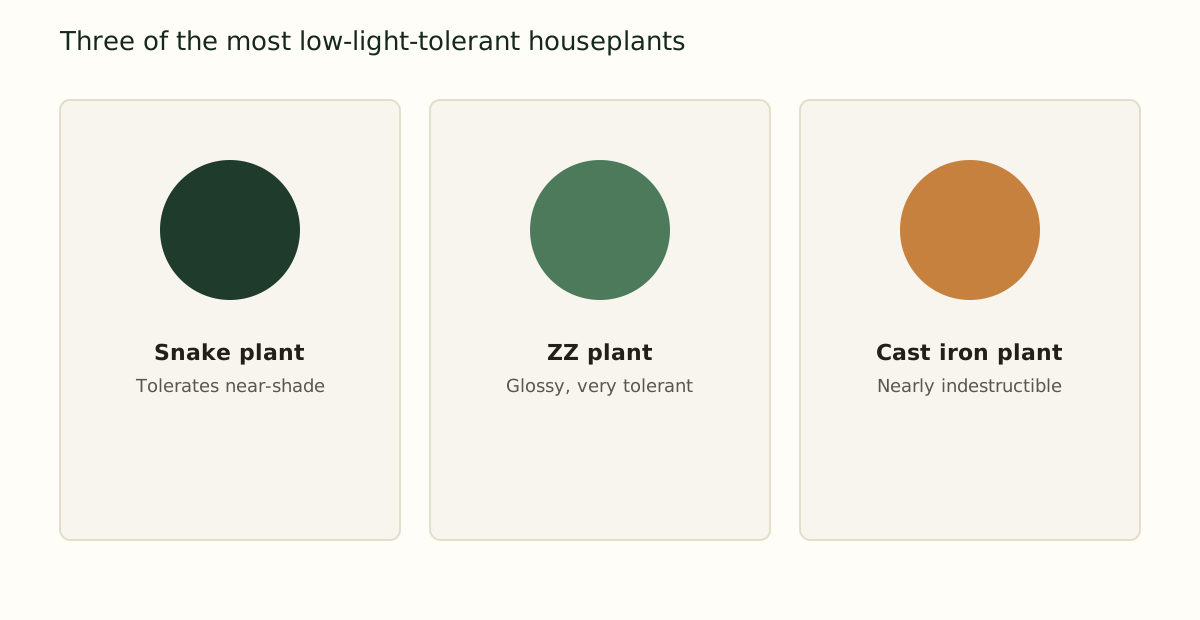
The difference between a plant that merely limps along in a dim room and one that actually looks good there matters more than plant tags usually let on. Cast iron plant earned its common name honestly — it's remarkably tolerant of neglect, low light, and inconsistent watering, and it was a popular choice in Victorian-era parlors specifically because it handled the dim, gas-lit interiors of the time better than almost anything else available. ZZ plant stores water in thick underground rhizomes, letting it go long stretches without water while maintaining its glossy, upright foliage even in interior rooms with no direct window access. Snake plant (recently reclassified botanically as Dracaena trifasciata) tolerates low light about as well as any plant commonly sold at retail, alongside strong tolerance for irregular watering.
Comparing tolerance across common options
Full care profiles
| Plant | Minimum light | Watering | Growth speed |
|---|---|---|---|
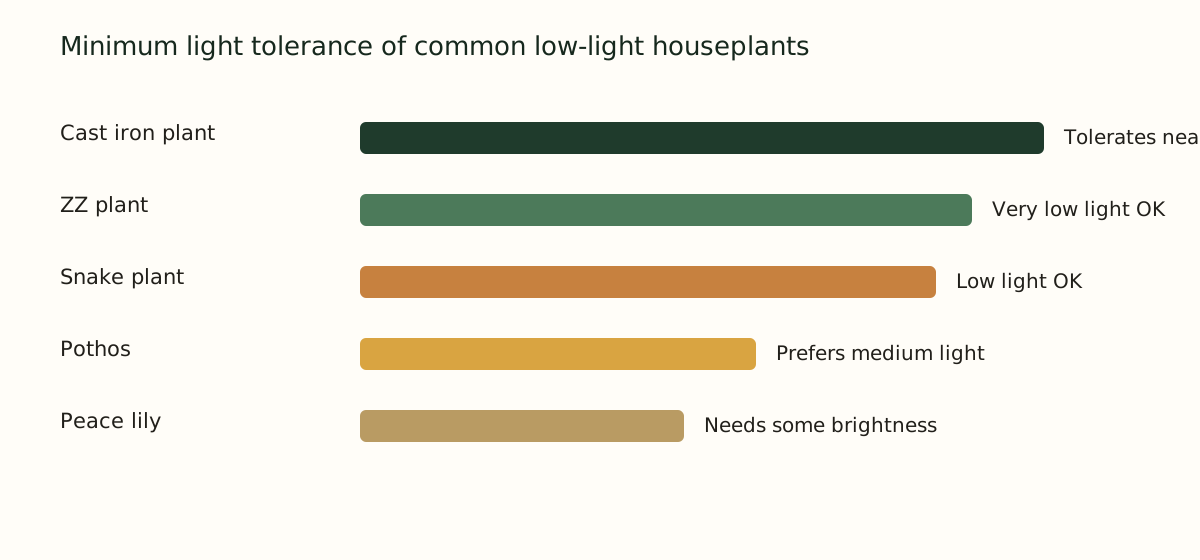
| Cast iron plant | Very low, near-shade | Every 10–14 days | Very slow |
| ZZ plant | Very low | Every 2–3 weeks | Slow |
| Snake plant | Low | Every 10–14 days | Slow |
| Pothos | Low to medium (prefers medium) | Weekly | Fast |
| Peace lily | Low to medium (prefers medium) | Every 5–7 days | Moderate |
| Chinese evergreen (Aglaonema) | Low to medium | Every 7–10 days | Moderate |
| Philodendron 'Brasil' | Low to medium | Weekly | Fast |
Notice that the fastest-growing plants on this list — pothos and philodendron — are also the ones that technically tolerate low light rather than genuinely preferring it. Slower-growing, more shade-adapted species like cast iron plant and ZZ plant trade speed for a stronger genuine fit with dim conditions.
A closer look at each plant
Cast iron plant is one of the slowest-growing common houseplants available, which is part of why it tolerates near-darkness so well — it simply doesn't need much light to sustain its modest growth rate. Its broad, dark green leaves have a leathery, durable texture and a genuinely old-fashioned look that's made it a resurgent favorite among low-light apartment dwellers in recent years, particularly those drawn to its reputation for being nearly impossible to kill through neglect.
ZZ plant grows from thick, potato-like rhizomes just below the soil surface that store substantial water reserves, which is the mechanism behind its famous tolerance for both low light and long stretches without watering. Its glossy, almost artificial-looking leaves reflect available light efficiently, helping it photosynthesize effectively even in dim rooms.
Snake plant stores water in thick, upright leaves and uses a specialized form of photosynthesis (CAM photosynthesis) that many succulent-adjacent plants share, allowing it to conserve water and tolerate lower light than typical broad-leafed tropical foliage plants. It's available in numerous cultivars with different leaf patterns and colors, all sharing similar low-light tolerance.
Pothos genuinely can survive in low light, and its reputation as a low-light plant isn't undeserved, but it grows noticeably faster, fuller, and more vibrantly variegated in medium to bright indirect light. In true low light, expect slower vines with less pronounced leaf variegation than the same plant would show in a brighter spot.
Peace lily tolerates low light reasonably well but is one of the more water-demanding plants on this list, and it flowers far less reliably, if at all, in genuinely dim conditions — most peace lilies grown purely for foliage in low light simply won't bloom the way the same plant would near a bright window.
Chinese evergreen comes in numerous cultivars with varying degrees of variegation, and as a general rule, more heavily variegated (lighter-colored) cultivars need somewhat more light to maintain their patterning than solid dark green cultivars, which tolerate lower light more readily.
Philodendron 'Brasil' is a fast-growing trailing philodendron with yellow-green variegated leaves that, similar to pothos, will hold up in low light but shows its best color and fullest growth in brighter conditions — a reasonable middle-ground option if you want some variegated color in a moderately dim space.
Overwatering is a much bigger risk than underwatering for plants in low light, precisely because slower growth means slower water use. A well-intentioned owner who waters a low-light plant on the same schedule as a sunny-windowsill plant is very likely to end up with soggy, oxygen-starved soil and eventual root rot.
Popular "low-light" plants that actually struggle in true low light
A handful of frequently recommended "low-light" houseplants perform noticeably worse in genuinely dim rooms than their reputation suggests, and it's worth knowing which ones before investing in a plant destined to slowly decline regardless of otherwise attentive care. Fiddle leaf fig is regularly sold as adaptable but is, in reality, one of the more light-demanding popular houseplants and performs poorly in true low light regardless of watering care. Fittonia (nerve plant) is often marketed toward terrariums and low-light setups, but it's genuinely a medium-light plant that stretches and fades in dim rooms. Most flowering houseplants, including African violets, need considerably more light than typical foliage plants to produce blooms, even when their foliage alone can limp along in dimmer conditions.
Placement tips within a low-light room
Even within a room that tests as low light overall, small placement choices make a real difference. Positioning a plant as close as reasonably possible to whatever light source exists — even a small window or a doorway to a brighter room — captures more usable light than the room's darkest corner. Light-colored walls and reflective surfaces nearby can bounce a modest amount of additional light onto a plant, which is a small but genuinely helpful effect in an otherwise dim space. Mirrors placed thoughtfully near a plant can produce a similar, if modest, benefit. Rotating a plant a quarter turn every couple of weeks also helps it grow more evenly, since even low-light-tolerant plants will lean toward whatever faint light source is available if left in one orientation for too long.
Signs even a shade-tolerant plant isn't getting enough light
Shade tolerance has limits, and even the plants on this list can show stress in truly insufficient conditions — a closet, a windowless interior room with no supplemental lighting, or a corner permanently blocked by furniture or other objects. Watch for:
- New leaves emerging noticeably smaller than existing leaves, rather than matching or exceeding their size.
- Long gaps of bare stem between leaves (etiolation) as the plant stretches in search of more light.
- Leaning dramatically toward any available light source, including a doorway or a lamp.
- Complete cessation of new growth for many months, beyond the expected general slowdown from low light.
If you're seeing these signs even from a genuinely shade-tolerant species, the honest fix is usually either relocating the plant to a brighter spot or adding a small grow light, rather than continuing to search for an even more tolerant plant — at some point, a space is simply too dark for live foliage without supplemental lighting.
Setting realistic expectations
Even the most shade-tolerant houseplant grows more slowly in low light than it would in brighter conditions, because photosynthesis — the process a plant uses to convert light into usable energy — simply has less to work with. A snake plant that might produce several new leaves in a bright spot over a growing season might produce only one or two in a genuinely dark corner. This isn't a sign of a problem; it's an expected tradeoff for placing a plant in the light range it was chosen for. Choosing low-light plants specifically because of this tradeoff, and not expecting the same growth rate as a plant in a brighter spot, avoids a lot of unnecessary worry.
It's also worth setting expectations around appearance rather than just growth rate. Even genuinely shade-tolerant plants often display slightly duller leaf color, a somewhat more open or sparse growth habit, and less pronounced variegation in low light compared to the same species grown in medium or bright indirect light. None of this indicates a health problem — it's simply how these species allocate limited light resources, prioritizing basic survival functions over the more decorative aspects of leaf color and density that a plant can afford to invest in when light is more abundant.
Why watering changes in low light
Slower growth in low light also means slower water use, which is why every plant on this list has a longer typical watering interval than its counterparts in brighter spots. This is one of the more common places beginners run into trouble: watering a low-light plant on the same schedule they'd use for a plant in a bright window leads to consistently soggy soil, since the plant simply isn't using water as quickly. Leaning more heavily on the soil-check method described in our watering guide, rather than a fixed schedule, matters even more for plants living in low light, where the margin for watering error is noticeably smaller than it is for a fast-growing plant in a bright, airy spot.
When to supplement with a grow light instead
If a dark space genuinely won't support any plant on this list — a windowless closet or a deeply shadowed interior room, for instance — a small LED grow light on a timer is often a more reliable solution than continuing to search for an ever-more-shade-tolerant species. A basic full-spectrum grow light run for 10–12 hours a day can support a much wider range of plants than a true low-light spot alone, opening up options beyond the handful of specialists covered here, including plants that would otherwise be entirely unsuitable for that room regardless of how carefully you cared for them.