Why the type of soil matters as much as watering
Two people can follow identical watering advice and get completely different results if one is using a dense, moisture-retentive mix and the other is using a fast-draining, chunky mix instead. Soil structure determines how long water sits around the roots after each watering, how much air reaches the root system, and how easily the plant can be overwatered by accident. Getting the soil right doesn't replace good watering habits, but it makes good watering habits far more forgiving — and the wrong soil can undermine even careful watering.
This is why two houseplant guides can give contradictory-sounding watering advice for the same species and both be correct: they may simply be describing plants growing in different soil textures. A monstera in a fast-draining chunky mix genuinely can tolerate more frequent watering than the same monstera in a dense, moisture-retentive mix, because the soil itself is doing part of the work of preventing waterlogging. Understanding this relationship is often more useful for a beginner than memorizing a specific watering interval, because it explains why the "right" watering frequency isn't actually fixed — it shifts depending on what the plant is potted in.
What's actually inside a bag of "potting soil"
Generic bagged "potting soil" or "potting mix" sold at most garden centers is usually a base blend built from some combination of the following ingredients, each contributing a different property to the finished mix:
- Peat moss or coco coir — the water-retentive base of most mixes, holding moisture and nutrients.
- Perlite — small white volcanic granules that create air pockets and speed drainage.
- Vermiculite — a mineral that holds water and nutrients, often used alongside perlite for balance.
- Pine or fir bark — chunky organic material that adds air pockets and slows compaction over time.
- Compost or worm castings — organic matter that adds nutrients and improves structure.
- Coarse sand — adds weight and drainage, common in cactus-specific mixes.
A generic all-purpose mix is a reasonable middle ground for many common houseplants, but it's rarely ideal for plants with more specific needs at either end of the spectrum — succulents that want to dry out fast and completely, or aroids like monstera that want a chunky, highly aerated mix closer to their natural growing conditions in the wild.
The three basic soil textures
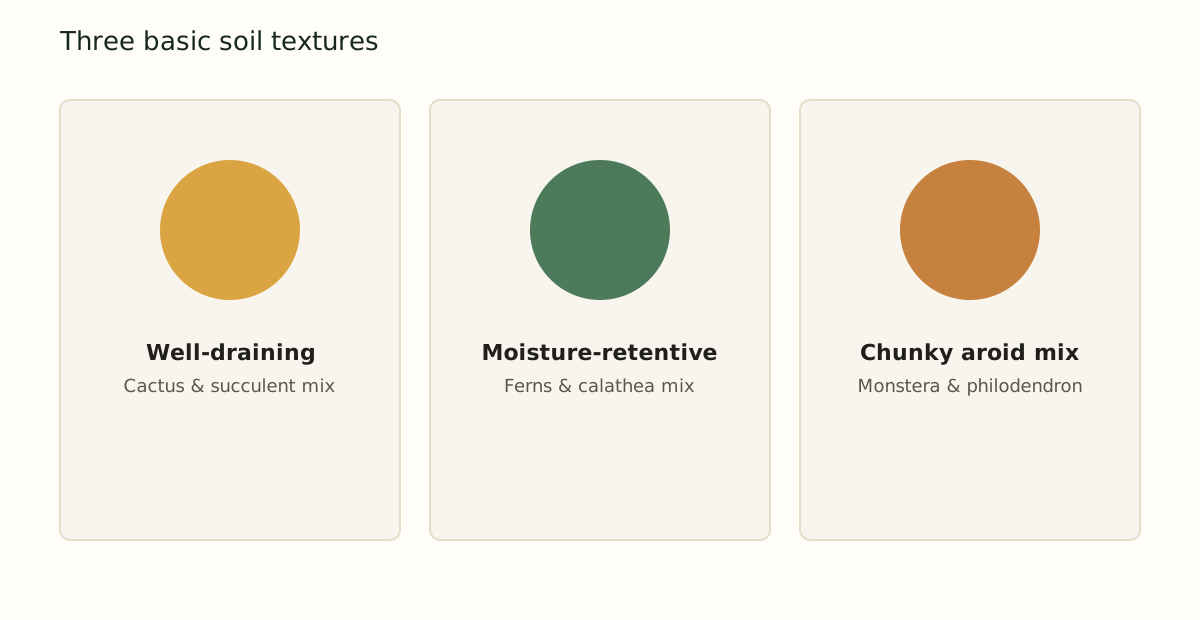
Well-draining (succulent & cactus mix)
Built from a high ratio of perlite, coarse sand, and pumice to a small amount of organic material, this texture is designed to dry out quickly and prevent water from pooling around roots that evolved in arid conditions and rot easily in consistently moist soil.
Moisture-retentive (standard & fern mix)
A balanced blend with more peat moss or coco coir relative to drainage material, holding moisture longer between waterings. This suits ferns, calathea, peace lilies, and other plants that prefer consistently damp — not soggy — soil.
Chunky aroid mix
Built around large particles — orchid bark, perlite, charcoal, and coco chips — with relatively little fine material, mimicking the loose, airy, fast-draining conditions many aroids and epiphytic plants experience growing on trees or in leaf litter in their native habitat.
Matching soil to plant type
The table below gives sensible defaults for common houseplant categories, based on how each plant type naturally grows in the wild and what its native root environment typically looks like. If you only remember one rule from this section, make it this: when genuinely in doubt, err toward more drainage rather than less — it's far easier to water a fast-draining mix a little more often than it is to rescue a plant sitting in soil that simply won't dry out.
| Plant type | Recommended texture | Why |
|---|---|---|
| Succulents, cacti | Well-draining | Prevents water from sitting around drought-adapted roots |
| Pothos, philodendron, monstera | Chunky aroid mix | Mimics loose, airy natural growing medium; reduces rot risk |
| Snake plant, ZZ plant | Well-draining to standard | Tolerant, but benefits from extra drainage given infrequent watering |
| Ferns, calathea, peace lily | Moisture-retentive | These plants dislike drying out fully between waterings |
| Orchids | Specialty orchid bark mix (not soil at all) | Most orchids are epiphytes and rot quickly in standard potting soil |
How individual ingredients affect drainage
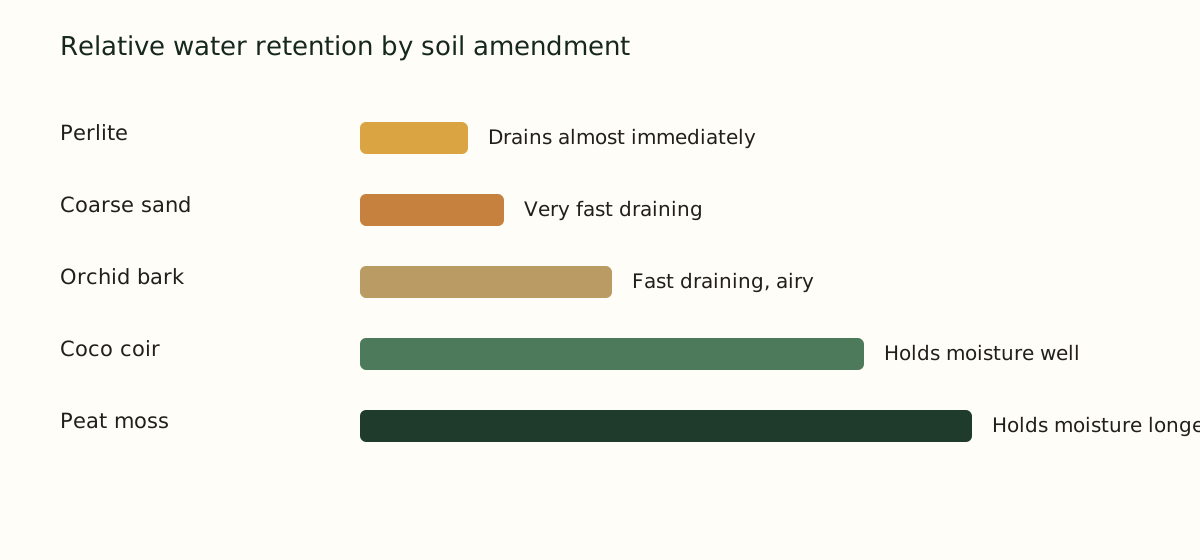
Understanding roughly where each ingredient falls on this spectrum makes it much easier to adjust a mix you already have rather than buying a new specialty bag for every plant. Adding a handful of perlite to standard potting soil measurably speeds drainage; adding coco coir to a fast-draining cactus mix measurably slows it.
Building your own mix
Buying three or four base ingredients and blending your own soil is often cheaper per pot than buying several specialty bags, and gives you control to fine-tune ratios as you learn what a specific plant prefers. Reasonable starting ratios by volume:
- Succulent/cactus mix: 2 parts standard potting soil, 2 parts coarse sand or pumice, 1 part perlite.
- Chunky aroid mix: 2 parts standard potting soil, 2 parts orchid bark, 1 part perlite, a handful of horticultural charcoal.
- Moisture-retentive mix: 3 parts standard potting soil, 1 part coco coir, 1 part perlite.
Keep a small bag of perlite and a small bag of orchid bark on hand even if you buy pre-made mixes — a handful of either stirred into an existing bag is usually enough to shift a mix that's draining too slowly for a specific plant.
Soil pH and nutrients: how much do they matter for beginners?
Most bagged potting mixes are formulated to sit in a mildly acidic to neutral pH range, roughly 5.5 to 6.5, which suits the overwhelming majority of common houseplants without any adjustment. A small number of species have more specific pH preferences — some ferns and calathea prefer slightly more acidic conditions, for instance — but for a beginner working with typical foliage houseplants, pH is rarely the first thing worth troubleshooting. If a plant is showing yellowing between the veins of otherwise healthy-looking leaves after ruling out watering and light issues, a nutrient deficiency tied to pH imbalance becomes more plausible, but it's usually one of the last things to check rather than the first.
Fresh bagged potting mix typically includes a small starter charge of nutrients, but this depletes within a few weeks to a couple of months of regular watering, which is why plants in fresh soil often don't need supplemental fertilizer right away, while plants that have been in the same soil for six months or longer usually benefit from a regular feeding schedule regardless of how good the underlying soil texture happens to be.
Peat-free and sustainable alternatives
Peat moss remains a common base ingredient in bagged mixes because it's cheap, lightweight, and holds moisture predictably well, but it's harvested from peat bogs that take centuries to regenerate naturally, which has pushed many growers and manufacturers toward more sustainable alternatives in recent years. Coco coir, made from coconut husk fiber, is the most widely available substitute and behaves similarly in terms of water retention, though it holds slightly less water long-term and some gardeners find it needs a touch more frequent watering as a result. Composted bark fines and coco chips are increasingly used as structural bulk in place of some peat content as well. None of these substitutions require a beginner to change their overall approach — they function as reasonable one-to-one swaps within the same basic texture categories described above.
Why some mixes include horticultural charcoal
Small amounts of horticultural charcoal are a common addition to chunky aroid mixes and orchid blends sold at most well-stocked garden centers. Charcoal itself doesn't hold much water, but it has a porous structure that can help absorb excess salts and impurities in the soil over time, and some growers find it helps keep a mix smelling fresh by limiting bacterial buildup in consistently moist, chunky mixes. It's a minor ingredient rather than a required one — a mix without charcoal will still perform well, but it's worth recognizing on an ingredient list rather than assuming it's filler.
How pot material interacts with your soil choice
Soil doesn't work in isolation — the material of the pot itself changes how quickly that soil dries out, which means the same exact mix can behave quite differently depending on what container it's actually planted in. Unglazed terracotta is porous and allows moisture to evaporate through the pot walls in addition to the soil surface, so a moisture-retentive mix in a terracotta pot dries out meaningfully faster than the identical mix in a plastic or glazed ceramic pot, which are effectively sealed and only lose moisture through the soil surface and drainage holes. This is genuinely useful when troubleshooting: a plant that seems chronically underwatered in a terracotta pot might just need a more moisture-retentive mix rather than more frequent watering, while a moisture-loving plant struggling in a sealed plastic pot might do better switched to terracotta rather than having its soil adjusted. Pot size interacts with soil similarly — a large volume of soil around a small root system holds excess moisture away from the roots for longer than the plant can use it, which is part of why sizing up a pot too aggressively during repotting is a common cause of soggy soil complaints that have nothing to do with the soil mix itself.
Signs you're using the wrong soil
- Soil stays wet for a week or more after watering, even when you're watering on a reasonable schedule — often means too little drainage material for that plant.
- Water runs straight through and out the drainage holes almost instantly, with the surface looking dry again within a day — often means too little water-retentive material for a plant that wants consistent moisture.
- Soil has compacted into a dense, hard mass over time, common with peat-heavy mixes that break down and lose structure after a year or two.
- Frequent fungus gnats despite reasonable watering habits, often linked to consistently damp organic material near the surface.
When and how to refresh old soil
Potting soil breaks down structurally over time — organic components decompose, air pockets collapse, and the mix compacts and drains more slowly than it did when fresh, even without any change whatsoever in your watering habits. As a general guideline, refresh or fully replace potting soil for most actively growing houseplants every one to two years, typically at the same time as repotting. Plants that grow slowly, like snake plants and ZZ plants, can often go considerably longer between soil refreshes since they're repotted less frequently to begin with.
Storing leftover potting mix between uses
If you buy potting mix in bulk or blend your own from separate ingredients, storing the leftover properly protects both its quality and your indoor air quality over the following weeks and months of storage. Keep bags sealed tightly between uses — potting mix left open to humid air can develop mold or fungal growth even before it touches a plant, and a musty smell coming from a bag is a reasonable sign to discard that batch rather than use it. Storing mix in a cool, dry location out of direct sunlight helps preserve its structure longer, since heat and moisture both accelerate the breakdown of organic components like peat and bark even in an unopened or resealed bag. If you're blending your own custom mixes regularly, keeping separate containers of the base ingredients — perlite, bark, coco coir — rather than pre-mixing large batches you won't use right away lets you adjust ratios on the fly for different plants without wasting material on a blend that ends up sitting unused for months at a time.