Do houseplants actually need fertilizer?
Fresh potting soil contains a starter supply of nutrients, but this depletes within a few weeks to a couple of months of regular watering, since watering gradually flushes nutrients out through the drainage holes along with excess water each time you water the plant thoroughly. Plants growing in the same soil for six months or longer are working with a nutrient-depleted medium and generally benefit from supplemental fertilizer during their active growing season to support continued healthy growth, fuller foliage, and more vigorous new growth than an unfed plant would typically produce. That said, fertilizer is not a fix for other care problems — a plant struggling from incorrect light, watering, or humidity won't be helped by fertilizer, and in some cases fertilizing an already-stressed plant can add further strain rather than solve the underlying issue, since a plant that isn't growing actively has little use for an influx of nutrients it can't put to work.
Reading a fertilizer label: what N-P-K means
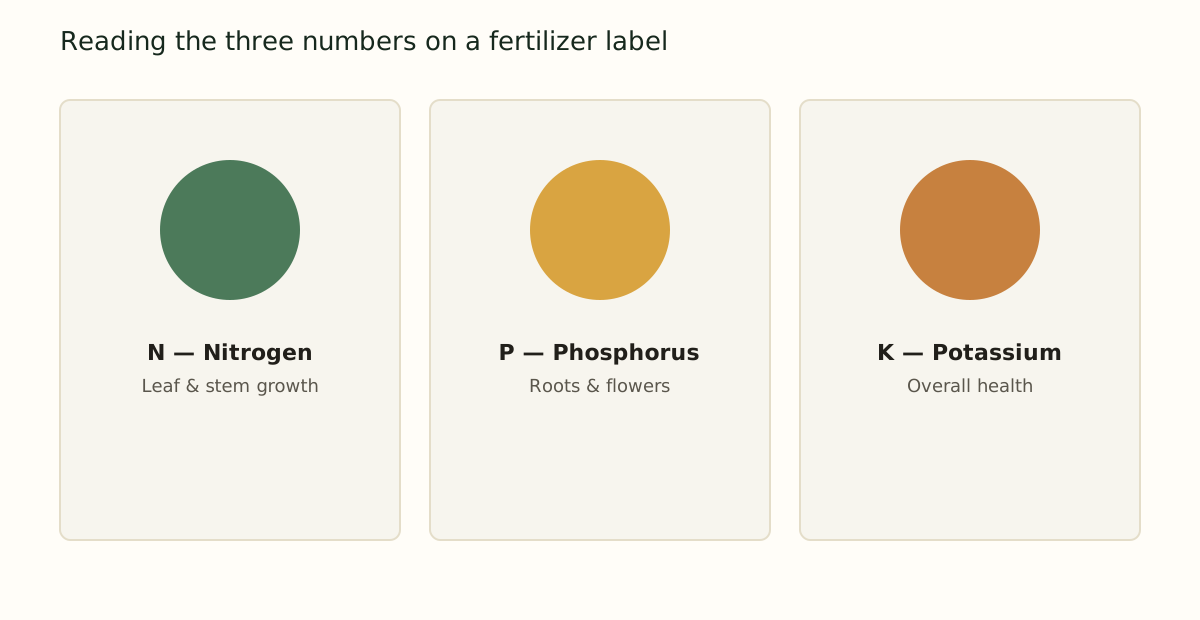
Every fertilizer label displays three numbers separated by dashes, such as 10-10-10 or 20-20-20, representing the exact percentage by weight of nitrogen (N), phosphorus (P), and potassium (K) — always listed in that precise order regardless of brand or formulation used. Nitrogen primarily supports leafy, green growth, which is why foliage houseplants generally benefit from a fertilizer with a relatively higher nitrogen number relative to the other two. Phosphorus supports root development and flowering, making it more heavily emphasized in fertilizers marketed specifically for flowering plants or "bloom booster" formulas. Potassium supports overall plant health, including disease resistance and water regulation within plant tissue, and appears in balanced amounts across most general-purpose formulations sold for typical indoor use. For most common foliage houseplants, a balanced or slightly nitrogen-forward fertilizer works well; a "balanced" fertilizer typically shows roughly equal numbers, like 10-10-10 or 20-20-20, while a nitrogen-forward one might read something closer to 20-10-10.
Gathering the right fertilizer type and understanding these three numbers up front makes the rest of this schedule far easier to follow correctly and consistently.
Liquid, granular, and slow-release: which to use
| Type | How it works | Best for |
|---|---|---|
| Liquid fertilizer | Diluted in water, applied at each feeding session | Beginners; easiest to control dosage precisely |
| Granular fertilizer | Sprinkled on soil surface, dissolves gradually with watering | Larger plants; less frequent application |
| Slow-release pellets/spikes | Release nutrients gradually over weeks to months | Low-maintenance collections; easy to forget schedules |
Liquid fertilizer, diluted into water at each feeding, is generally the easiest format for beginners to control precisely, since it's simple to under-dilute intentionally for a gentler feeding and adjust frequency as needed based on how a specific plant responds over time. Granular fertilizer sits on the soil surface and dissolves gradually as you water, offering a middle ground between the precision of liquid feeding and the convenience of slow-release options, and it's often a practical choice for larger floor plants where mixing and pouring diluted liquid fertilizer repeatedly becomes more cumbersome. Slow-release fertilizers reduce the mental overhead of remembering a schedule but offer less fine control over exact timing and amount, which can matter more for sensitive plants or precise seasonal adjustments — once a slow-release product is applied, you're committed to its release schedule for the following weeks or months regardless of how conditions change in the meantime.
A realistic seasonal fertilizing schedule
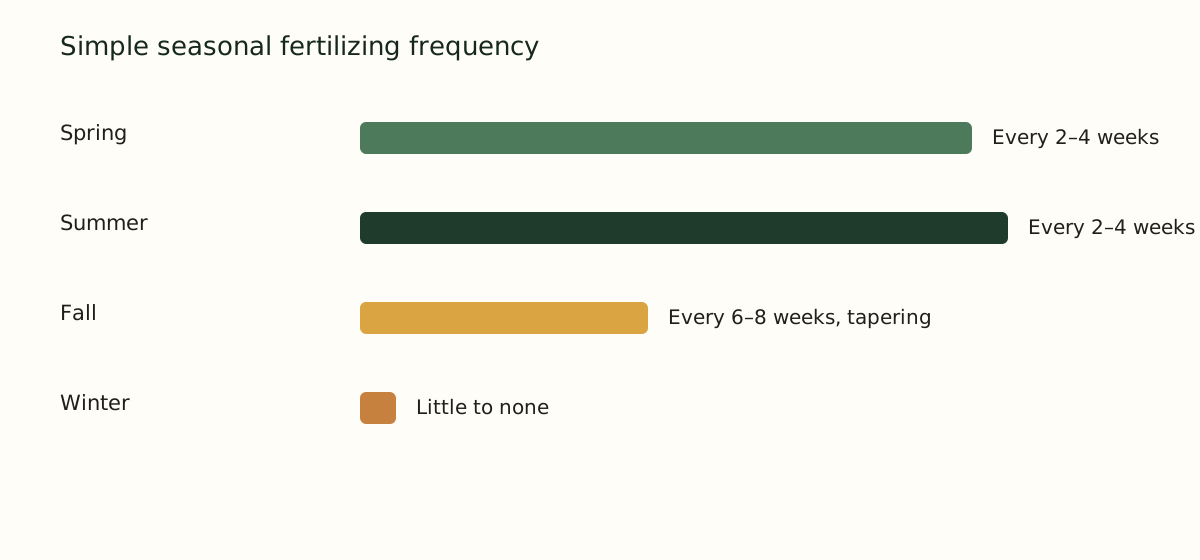
- Spring and summer (active growth): fertilize every two to four weeks at the label's recommended dilution, or at half-strength every two weeks for a gentler, more forgiving approach that's harder to overdo by accident.
- Early fall: taper to every six to eight weeks as growth naturally begins slowing with shorter days and cooler temperatures in most temperate climates.
- Winter (dormancy for most common houseplants): stop fertilizing entirely, or reduce to an absolute bare minimum, since most plants aren't actively using nutrients during this slower period and unused fertilizer can build up as salts in the soil, doing more harm than good during a time when the plant has genuinely little use for the extra nutrients.
This schedule assumes typical indoor conditions in a temperate climate with a clear seasonal light change across the year. In consistently warm, bright climates, or for plants under a grow light on a long daily schedule, growth may continue more steadily year-round, in which case a more consistent, less seasonally dramatic fertilizing schedule can make more sense overall.
How much fertilizer to actually use
A common, low-risk approach for beginners is to dilute liquid fertilizer to half the strength recommended on the label, applied at the label's recommended frequency, an approach often summarized as "weak but frequent" among experienced growers. This reduces the risk of fertilizer burn — a common problem from over-concentrated fertilizer contacting sensitive root tissue — while still providing meaningful nutrition during active growth periods. Always fertilize into moist, not bone-dry, soil, since applying concentrated fertilizer to dry soil increases the risk of root damage from the sudden concentration of salts contacting dry root tissue that has no surrounding moisture to help dilute and buffer the exposure.
Signs of over- and under-fertilizing
Overfertilizing typically shows up as a white or crusty buildup on the soil surface or pot rim (mineral salt buildup), brown, crispy leaf edges or tips that look distinctly burned rather than simply dry, or wilting despite adequate soil moisture that would otherwise suggest the plant has plenty of water available. Underfertilizing shows up more subtly — pale, yellowish overall leaf color (particularly noticeable on older, more established growth first), slower than expected growth during what should be the active growing season, or smaller new leaves than the plant has previously produced under similar light and watering conditions. Because underfertilizing symptoms overlap considerably with several other common care issues, including low light and inconsistent watering, it's worth ruling out those factors first before concluding a plant simply needs more fertilizer, since adding fertilizer on top of an unrelated problem won't resolve the actual underlying cause.
Recovering from fertilizer burn
If you suspect a plant has been overfertilized — visible salt crust on the soil surface, crispy brown leaf margins, or sudden wilting after a recent feeding session — the first and most effective step is flushing the soil thoroughly with plain water. Run a generous volume of room-temperature water through the pot, roughly three to four times the pot's total volume, letting it drain completely each time, which helps dissolve and carry away excess salts that have accumulated in the soil over previous feedings. Hold off on any further fertilizing for at least a month afterward, giving the plant time to recover and resume normal growth before reintroducing feeding at a more conservative dilution than you were using before the burn occurred. Leaves that are already burned won't heal or reverse their existing damage, but this process prevents further harm and gives new growth the best realistic chance of emerging healthy.
Micronutrients beyond N-P-K
Beyond the three primary nutrients shown in the N-P-K numbers on any standard label, plants also need smaller amounts of secondary nutrients and micronutrients — including calcium, magnesium, iron, and zinc — for genuinely healthy, well-rounded growth. Most general-purpose fertilizers marketed for houseplants include at least some of these micronutrients even when they're not prominently featured on the front label, and a plant fertilized regularly with a reasonably complete, quality fertilizer rarely develops a specific micronutrient deficiency in practice. That said, certain deficiencies do have recognizable symptoms worth knowing: magnesium deficiency often shows as yellowing between leaf veins while the veins themselves stay noticeably green, and iron deficiency produces a similar but typically more pronounced pattern, especially visible on newer growth near the top of the plant. If you notice this specific pattern despite an otherwise reasonable fertilizing routine, switching to a fertilizer explicitly formulated with a broader micronutrient package can resolve it faster than simply increasing the frequency of a standard fertilizer that may already be perfectly adequate in nitrogen, phosphorus, and potassium alone.
Special cases worth knowing
- Newly potted or repotted plants should go unfertilized for four to six weeks, since fresh potting mix already contains a starter nutrient charge and disturbed roots are more sensitive to fertilizer salts during their recovery period.
- Succulents and cacti generally need considerably less fertilizer than typical foliage houseplants, reflecting their naturally slower growth and long adaptation to nutrient-poor native soils in arid environments — a specialized, more dilute cactus fertilizer or a standard fertilizer at quarter-strength works well for this category.
- Flowering plants often benefit from a fertilizer with a higher phosphorus number specifically during their bloom period, switching back to a balanced or nitrogen-forward formula during non-blooming growth phases outside of the flowering season.
- Plants in low light generally need less fertilizer than the same species in bright light, since slower growth in dim conditions means less overall nutrient demand and a reduced ability to actually use additional feeding — see our low-light plant guide for more on adjusting overall care for dim spaces.
Common fertilizing mistakes
- Fertilizing on a fixed schedule year-round without adjusting for seasonal growth changes, leading to unnecessary salt buildup during dormant periods when the plant has little use for the additional nutrients being applied.
- Applying fertilizer at full strength more often than recommended, assuming more is always better for faster growth — this is one of the most common causes of fertilizer burn among home growers new to feeding houseplants.
- Fertilizing dry soil instead of moist soil, increasing the risk of root damage from concentrated salts contacting parched root tissue with no buffering moisture present.
- Fertilizing a stressed or recently repotted plant, adding a further burden during an already vulnerable recovery period rather than giving it time to stabilize first.
- Never flushing the soil with plain water occasionally to clear accumulated mineral salts, which build up over months of regular fertilizing even when dilution and frequency are otherwise correct.
Flushing a pot with a generous amount of plain water every few months — letting it run through fully and drain out the bottom completely — helps clear accumulated fertilizer salts from the soil before they build up to problematic levels, particularly useful for plants that are fertilized regularly and consistently throughout a long growing season.