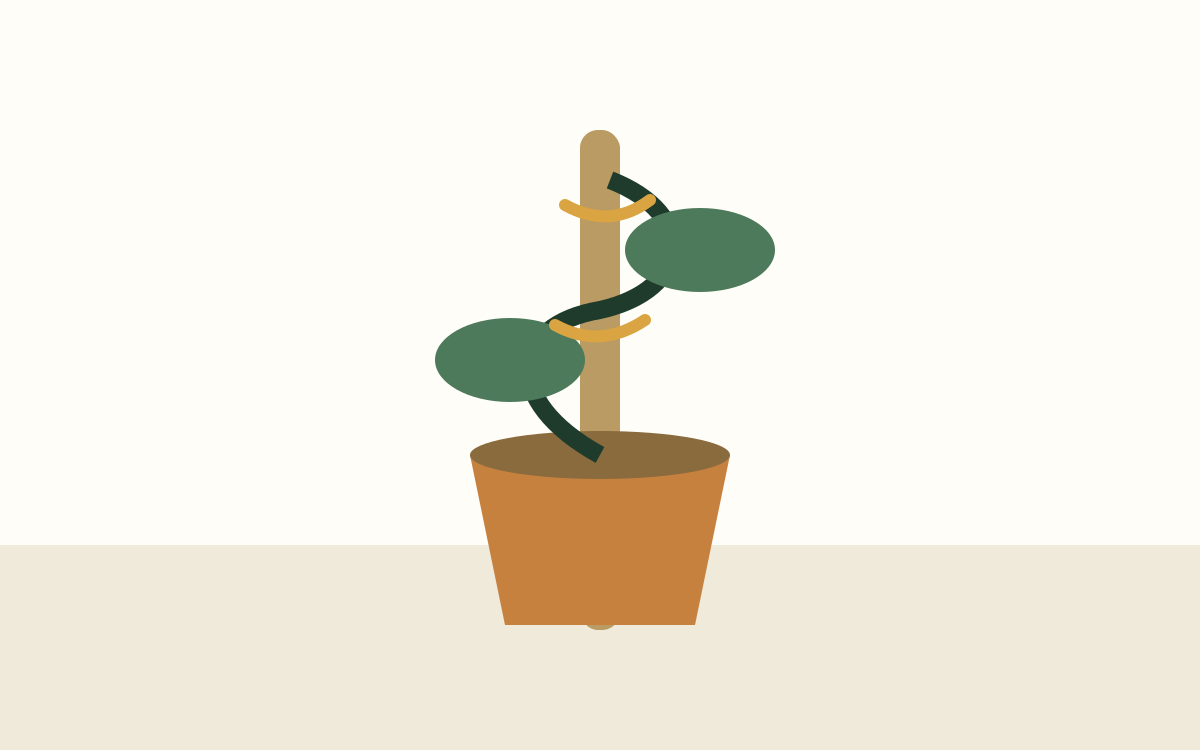
Does the plant actually need support?
Some houseplants climb tree trunks or other structures in nature, using aerial roots, twining stems, tendrils, or leaning growth. Others naturally trail, creep, form self-supporting canes, or grow from a central crown. Support is useful when it matches that growth habit, prevents breakage, makes a top-heavy plant safer, or helps position leaves toward usable light.
A leaning plant does not always need a pole. It may be reaching toward a window because light is one-sided or inadequate. Installing a support can hold it upright while leaving the real cause unchanged. Check light direction, rotate only when appropriate, and review the light-level guide before forcing a stretched stem into a vertical shape.
Trailing pothos and philodendrons can be grown either hanging or climbing. The choice affects appearance, leaf orientation, and maintenance, but neither form is automatically healthier. Decide how much height, watering work, wall protection, and structural weight the room can accommodate.
Choose a support that fits the growth habit
Simple stakes stabilize one or a few upright stems. Bamboo, coated metal, or another smooth plant-safe material works when the stake is strong enough and will not decay rapidly in damp mix. Trellises spread flexible vines across a wider area and make individual stems accessible for tying and inspection.
Coir or fiber poles provide a textured surface for climbing but do not necessarily stay moist or encourage every aerial root to attach. Moss poles can provide a moist rooting surface when constructed and maintained correctly, but they add watering, weight, and humidity-management work. A dry decorative pole and a functional moist propagation-style pole are different systems.
Planks and boards can suit some shingling or climbing plants when the species responds to a broad surface. Wall clips guide vines but must be rated for the surface and kept away from electrical wiring, heat sources, and places where adhesive failure could drop a plant. Never let aerial roots attach directly to a wall you are unwilling to mark.
Plan size and stability before installation
Estimate the mature height you can realistically maintain, not just the plant's current height. A short stake replaced every few months causes repeated root disturbance, while an oversized heavy pole can make a small pot dangerously top-heavy. The container, support, wet substrate, and foliage together form one structure.
Choose a broad, stable pot when the upper plant will carry significant weight, but do not jump to a huge soil volume solely to balance a pole. An oversized pot remains wet longer. A heavier cachepot, separate external frame, wall-secured trellis, or base designed for the support may improve stability without surrounding the roots with excessive mix.
Test whether the empty support flexes, has sharp edges, sheds fibers, or corrodes. Consider ceiling height, watering access, curtains, fans, doors, and paths used by people and animals. A beautiful setup that must be moved every time the plant is watered is unlikely to remain safe or consistent.
Install a support with minimal root damage
The easiest time to place a substantial pole is during a justified repotting, when you can see the root ball and position the support near the pot wall. Install the pole before filling around it so it reaches the base and does not wobble. Keep the plant at its previous depth and avoid compacting mix hard around the support.
If adding a narrow stake to an established pot, insert it slowly near the edge rather than driving it through the center. Stop if you meet strong resistance; forcing the stake can pierce major roots. For a large pole or root-filled pot, wait for repotting or use an external support instead of repeatedly probing the root zone.
After installation, confirm that drainage holes remain open and the support does not block watering across the root ball. Follow our repotting guide when the plant also needs a new container. Do not repot solely because a decorative support would look appealing.
Attach stems with soft, loose ties
Use soft plant tape, reusable hook-and-loop plant ties, cotton strips, or another broad flexible material. Thin wire, fishing line, and tight string can cut into stems as they expand. Position the tie around the support and stem with room for growth; it should guide, not clamp.
Tie the main stem or sturdy internode rather than trapping a leaf, petiole, new shoot, or unfurling growth. On vining aroids, orient the side with aerial roots toward the support when practical and keep leaf fronts facing usable light. Do not bend a rigid mature stem sharply to match the pole; guide new growth gradually.
Inspect ties monthly during active growth and after moving the plant. Loosen or reposition any material leaving an indentation. Remove redundant ties once the plant attaches securely, but do not assume every species will attach on its own. A support system requires maintenance as stems thicken.
Moss poles: useful, but not maintenance-free
A functional moss pole keeps an appropriate fibrous medium moist enough for aerial roots to enter. That can support larger, more mature climbing growth in suitable species. It also creates an additional moisture reservoir that can dry faster than the pot and may drip into the root zone during watering.
Do not keep the potting mix constantly wet merely to keep the pole damp. Water the pole separately and control runoff. Ensure the structure has airflow and does not remain sour or decomposed. In a low-light room, both the pole and pot may dry slowly, increasing the need for careful monitoring.
Choose materials from a reputable source and consider local rules and sustainability concerns around harvested moss. Coir, synthetic fill designed for plant supports, boards, or a dry trellis may meet the goal with less moisture management. A plant does not need a moss pole simply because social media examples use one.
Handle aerial roots without forcing them
Aerial roots help some climbing plants anchor and seek moisture. Guide flexible roots toward a support or potting medium, but do not force brittle mature roots to bend. Broken aerial roots are usually not fatal, yet repeated unnecessary cutting removes a structure the plant can use.
Do not place aerial roots into cups of standing water as a permanent universal practice. Water can spill, become stagnant, or encourage growth that later struggles when removed. If you are using air layering or another deliberate propagation technique, follow the complete method rather than improvising a reservoir around one root.
Roots attaching to painted walls, wood furniture, or porous surfaces can leave marks. Maintain a gap, use a removable protective backing, or choose a freestanding support. Check behind foliage periodically for dampness, pests, and surface damage.
Aftercare and ongoing training
Return the supported plant to adequate stable light and check moisture normally. Installation may have disturbed roots or changed airflow around the pot, but it does not automatically require fertilizer or extra water. If the support includes moist material, track its watering separately from the soil.
Guide new growth while it is still flexible. Add ties before a long vine becomes heavy, and prune only when there is a clear shaping or health goal. The pruning guide explains node placement and tool hygiene. Healthy cuttings can be propagated when the species and structure allow it.
Inspect the base for wobble, rot, rust, mold, or compaction. Replace a degraded support before it collapses, planning the transition so attached roots are not torn suddenly. Photograph the plant every month to track leaf size, spacing, and whether the structure is producing the intended result.
Pet, child, wall, and furniture safety
A tall supported plant can act like a lever. Anchor external structures according to their manufacturer and keep the pot outside running and climbing routes. Avoid loose loops that can catch paws or fingers, exposed wire ends, brittle stakes, and lightweight stools that tip when bumped.
Confirm the plant's toxicity before placing newly elevated leaves within a pet's reach. A pole may make the plant easier for a cat to climb. Secure cords from nearby grow lights, protect walls from wet moss and aerial roots, and use waterproof trays that do not hide standing water.
Reassess safety as the plant grows. Added foliage, wet pole material, and a taller center of gravity change the load. If the setup cannot be made stable in the available space, trailing the plant from a secure pet-inaccessible position or pruning it to a manageable size may be the better choice.