Understanding toxicity severity
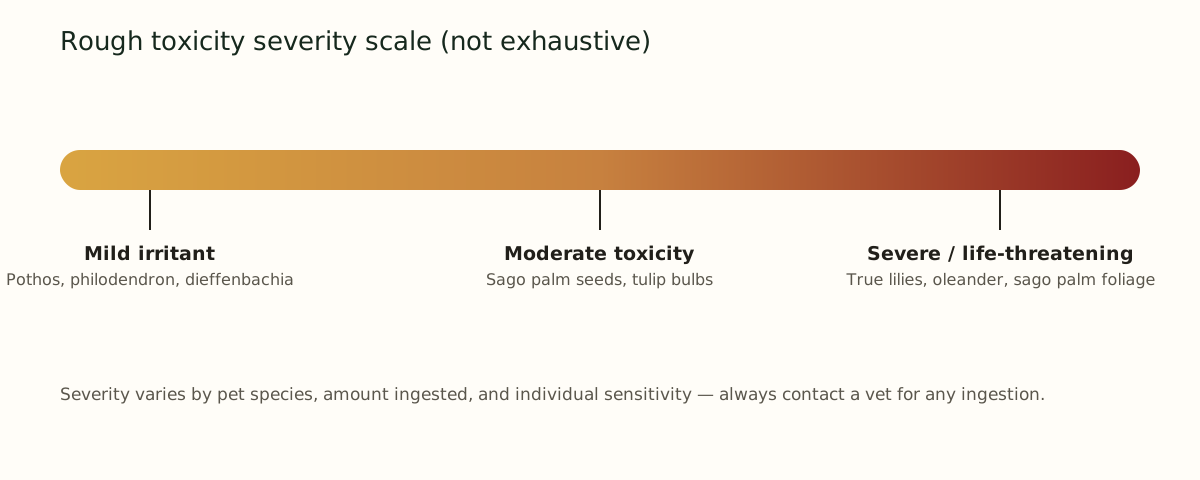
Not all "toxic" plants pose the same level of danger. Many popular houseplants, including pothos and philodendron, contain calcium oxalate crystals that cause mouth and throat irritation, drooling, and mild digestive upset if chewed — unpleasant but rarely life-threatening in small amounts. A smaller number of plants, including true lilies and oleander, contain compounds that can cause severe organ damage or death, sometimes from a very small amount ingested. Knowing where a specific plant falls on this spectrum matters for how urgently you should respond to any ingestion.
Plants produce these compounds primarily as a defense mechanism against being eaten by animals in the wild, not because of any relationship to how they're marketed or sold as houseplants — a plant's popularity, price, or "easy care" reputation has no bearing on its toxicity status. This is worth internalizing because it's genuinely counterintuitive: some of the most widely recommended, most commonly gifted houseplants, including pothos and philodendron, are toxic, while some far less commonly discussed plants are completely safe. Toxicity and ease of care are unrelated variables, and neither predicts the other.
The most commonly kept toxic houseplants
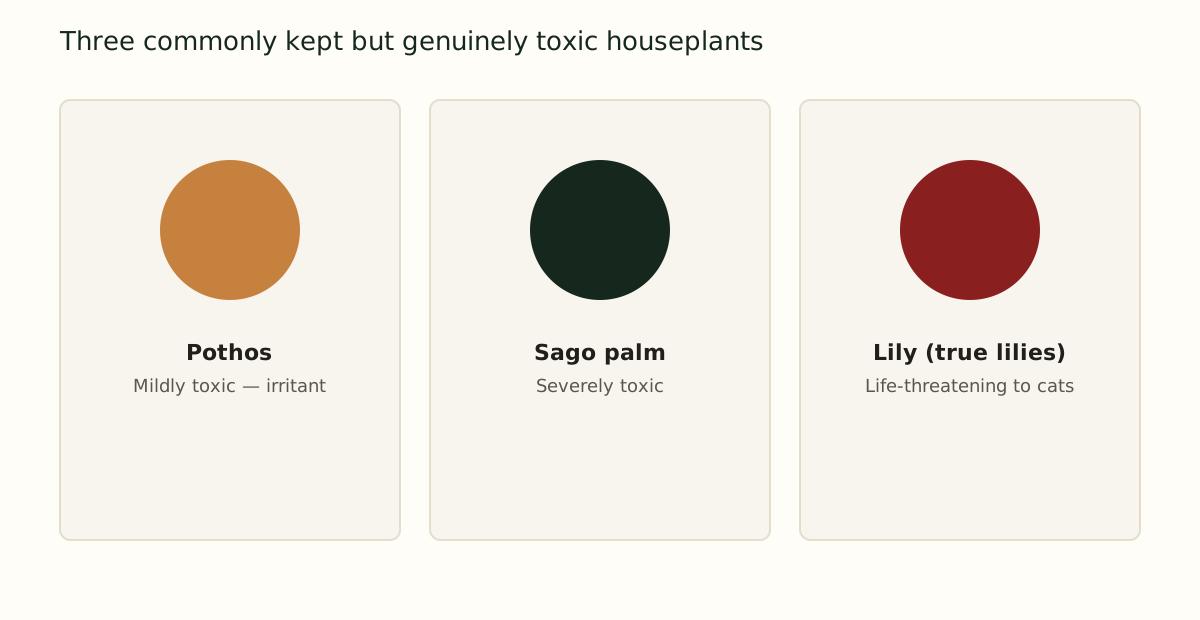
Full comparison table with pet-safe alternatives
| Toxic plant | Severity | Pet-safe alternative |
|---|---|---|
| Pothos | Mild irritant | Spider plant |
| Philodendron | Mild to moderate | Parlor palm |
| Sago palm | Severe (potentially fatal) | Ponytail palm |
| True lily (Lilium, Hemerocallis) | Severe, life-threatening to cats | Gerbera daisy (verify before purchase) |
| Dieffenbachia (dumb cane) | Moderate | Calathea |
| Aloe vera | Mild to moderate | Haworthia |
| Jade plant | Mild to moderate | Peperomia |
| Oleander | Severe (cardiac) | Non-toxic flowering shrub (verify locally) |
| English ivy | Mild to moderate | Spider plant (trailing habit) |
| Snake plant | Mild irritant | Parlor palm or ponytail palm |
| ZZ plant | Mild irritant | Parlor palm |
Why so many popular houseplants are toxic
It can feel almost unfair that some of the most beginner-recommended, widely gifted houseplants — pothos and philodendron chief among them — turn out to carry a toxicity warning. Part of the explanation is simply that these plants are popular because they're genuinely easy to grow: tolerant of inconsistent watering, adaptable to a range of light levels, and fast-growing enough to feel rewarding for a new plant owner. Those same traits that make a plant easy for humans to keep alive have nothing to do with whether it evolved chemical defenses against being eaten, which is a separate evolutionary pressure entirely. A plant can be exceptionally forgiving of a missed watering and still be mildly toxic if chewed, and recognizing that these are unrelated characteristics helps explain why toxicity warnings show up on plants that otherwise seem like ideal beginner choices.
Detailed profiles of each toxic plant
Pothos is one of the most widely sold houseplants and, despite its popularity and easy-care reputation, contains calcium oxalate crystals throughout its leaves and stems that cause immediate oral irritation, drooling, and difficulty swallowing if chewed. It's rarely life-threatening but is genuinely unpleasant for a pet and worth avoiding in homes with curious chewers, especially cats that enjoy batting at and nibbling on trailing vines. See our list of pet-safe houseplants for care-alike alternatives like spider plant.
Philodendron, in both its climbing and non-climbing varieties, shares the same calcium oxalate mechanism as pothos and produces similar symptoms — oral irritation, drooling, and vomiting. Its enormous popularity as a houseplant genus, spanning dozens of commonly sold cultivars, means it's an especially common source of accidental pet exposure across a wide range of households.
Sago palm is significantly more dangerous than the plants above — every part of the plant is toxic, but the seeds are especially concentrated with cycasin, a compound that can cause acute liver failure even from a small amount ingested. Sago palm poisoning is a genuine veterinary emergency with a meaningful fatality rate even with treatment, and this plant is worth avoiding entirely in any home with pets, regardless of how carefully it's placed or how attractive its architectural, palm-like form might be.
True lilies (the genus Lilium, including Easter lilies, tiger lilies, and Asiatic lilies, along with daylilies in the genus Hemerocallis) are uniquely dangerous to cats specifically — even small amounts of any part of the plant, including pollen and vase water, can cause acute kidney failure in cats within days. Dogs are less severely affected but can still experience digestive upset. This is one of the few plant toxicity issues where an ounce of prevention is genuinely critical, given how narrow the window for effective treatment can be, and how commonly these flowers appear in gift bouquets without any warning label attached.
Dieffenbachia, commonly called dumb cane, causes intense oral irritation and swelling that can, in severe cases, interfere with breathing or swallowing, making it one of the more acutely uncomfortable mild-to-moderate toxic plants on this list even though it's rarely fatal. Its common name references the temporary speech difficulty the swelling can cause in humans who chew it, which gives a fairly vivid sense of just how irritating the plant's sap actually is on contact with soft tissue.
Aloe vera is frequently assumed to be universally beneficial because of its widespread use in human skincare products, but the plant itself is toxic to cats and dogs if ingested, typically causing vomiting, diarrhea, and lethargy. The clear gel commonly used topically for burns and skin care is a completely different exposure route than a pet actually chewing and swallowing the plant material.
Jade plant, a popular and easy-care succulent often passed down as cuttings between family and friends, causes vomiting, incoordination, and depression in pets if ingested, through a mechanism that isn't fully understood by researchers despite the plant's long history in cultivation. Its easy-care reputation, similar to pothos, makes it a common accidental household risk that catches many pet owners off guard.
Oleander is more commonly grown outdoors as a flowering shrub than as a houseplant, but it's included here because it does appear in some indoor plant collections and container gardens, and it's genuinely one of the most dangerous ornamental plants commonly available — it contains cardiac glycosides that can cause fatal heart arrhythmias in both pets and humans from a very small amount ingested, including from smoke if the plant material is ever burned.
English ivy causes oral and gastrointestinal irritation similar to pothos and philodendron, and its trailing growth habit and low light tolerance make it a popular choice for hanging baskets, which unfortunately also puts it within reach of climbing cats more often than upright floor plants placed on the ground.
Snake plant and ZZ plant, both popular for their extreme low-light tolerance covered in our low-light plant guide, are both mild irritants due to calcium oxalate content, causing symptoms similar to pothos rather than anything severe. Their overall low-maintenance appeal makes them common picks that pet owners may not realize carry this mild risk.
The "lily" name confusion
The word "lily" causes more toxicity confusion than almost any other plant name. True lilies (Lilium and Hemerocallis genera) are severely toxic to cats, but many popular houseplants use "lily" in their common name while belonging to entirely different, much less dangerous plant families. Peace lily (Spathiphyllum) causes only mild oral irritation, similar to pothos, and is not related to true lilies at all despite the shared common name causing frequent, understandable confusion among pet owners. Similarly, "lily of the valley" (Convallaria majalis) is a genuinely different and separately toxic plant, this time affecting the heart rather than the kidneys, and "lily turf" (Liriope) is a common landscaping groundcover that is, confusingly, considered non-toxic despite carrying yet another unrelated "lily" name. Because the common names overlap so confusingly across these genuinely different plant families, always verify the full botanical name before assuming a "lily" is either safe or equivalently dangerous to another plant sharing the name.
What to do if your pet eats a toxic plant
- Identify the plant if possible, including its botanical name, and note approximately how much was consumed and when.
- Contact your veterinarian or an animal poison control hotline immediately, even if your pet isn't showing symptoms yet — some toxins, including those in true lilies, have a delayed onset and treatment is often most effective when started before symptoms appear.
- Do not induce vomiting unless specifically instructed to by a veterinary professional, since this can cause additional harm depending on the plant involved and the pet's current condition.
- Bring a sample or photo of the plant to the veterinary visit if possible, which helps with faster, more accurate identification and treatment than a verbal description alone.
- Monitor closely even after initial treatment, since some toxic reactions unfold over 24 to 72 hours rather than immediately, particularly with kidney-affecting toxins like those in true lilies.
Keeping the ASPCA Animal Poison Control Center number saved in your phone, alongside your regular veterinarian's contact information, means you're not searching for it during an actual emergency, when every minute matters more than it does while reading this guide calmly in advance.
Preventing access without giving up plants entirely
Most pet owners don't need to eliminate houseplants altogether — placement and awareness solve the majority of the risk. Keeping genuinely toxic plants, if you choose to keep any, in rooms your pet doesn't have access to, on high shelves well out of jumping range for cats, or in a plant room with a closed door addresses much of the risk without requiring a complete plant collection overhaul. For severely toxic plants like sago palm, true lilies, and oleander, though, the safest approach in a pet household is simply not keeping them at all, regardless of placement — the consequences of an accidental exposure are too serious to manage through placement alone, and no shelf is entirely guaranteed to be out of reach for a determined, agile cat.
For households with young, particularly curious pets — kittens and puppies especially — it's worth being more conservative than this guide's general severity guidance suggests, since young animals explore more with their mouths and are less predictable about what they'll investigate. A temporarily more cautious approach during the first year with a new pet, gradually relaxing as you learn the individual animal's habits, is a reasonable strategy that many experienced multi-pet households adopt.