
The NASA Clean Air Study, and why the popular claim overstates it
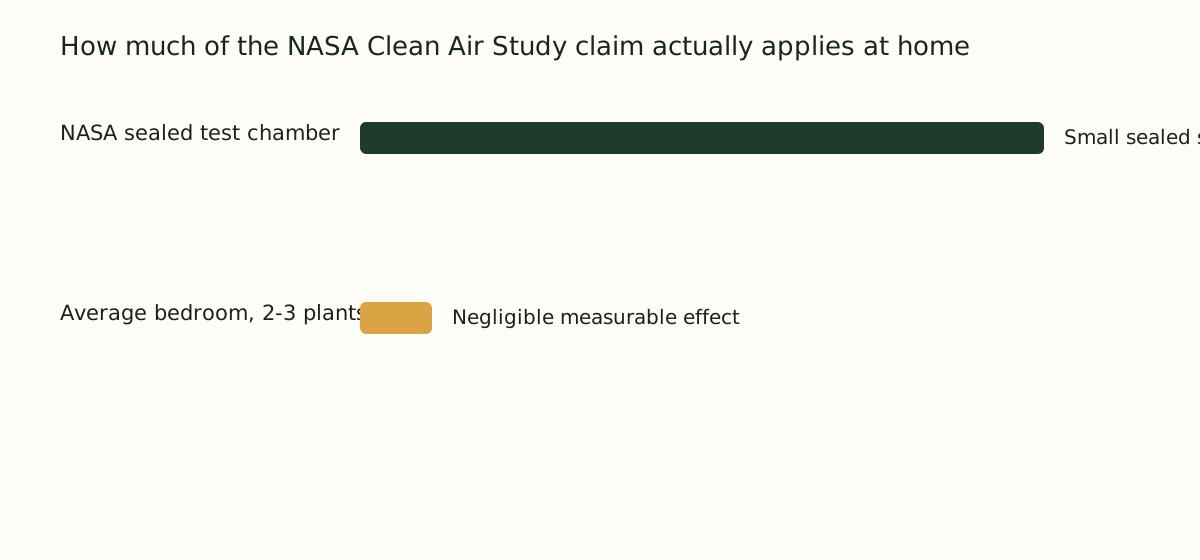
The widely repeated claim that houseplants "purify the air" in your bedroom traces back to a 1989 NASA study that tested how effectively certain houseplants removed specific pollutants — including formaldehyde, benzene, and trichloroethylene — from small, sealed test chambers designed to simulate a spacecraft environment. The study did find measurable pollutant reduction under those controlled, enclosed laboratory conditions. What gets lost in most popular summaries is the scale: a normal bedroom is not a small sealed chamber, it has far more air volume, and it exchanges air with the rest of the house continuously through doors, gaps, and ventilation systems that simply don't exist in a sealed spacecraft module. Numerous follow-up analyses, including a widely cited 2019 review, have concluded that replicating the NASA study's air-purifying effect in a real, normally ventilated room would require an impractically large number of plants — often estimated in the dozens per room — far beyond what anyone actually keeps as bedroom decor.
This doesn't mean bedroom plants are worthless for air quality — it means the specific "purifies your air" claim, as commonly repeated in marketing and casual advice, significantly overstates what one or two houseplants can realistically achieve in your actual bedroom.
What bedroom plants realistically do for air and sleep
Setting aside the exaggerated air-purification claim, there's a more modest and better-supported picture worth understanding. Plants do respire, taking in carbon dioxide and releasing oxygen during the day through photosynthesis, and some research has associated higher indoor humidity — which plants contribute to through transpiration — with more comfortable respiratory conditions for some people, alongside a well-established link between visible greenery and modestly reduced self-reported stress. None of this amounts to a "purified" or medically improved bedroom environment, but it's a genuine, if modest, contribution rather than nothing at all, and it's worth keeping that distinction clear when deciding how much weight to put on plants as part of a broader wellness routine.
How a research finding became a marketing claim
The gap between what the 1989 NASA study actually found and what gets repeated in plant-shop signage and lifestyle articles is a fairly typical example of how a specific, bounded scientific finding gets simplified into a broader, catchier claim as it spreads through popular media over decades of retelling. The original research was genuinely conducted with a specific, practical goal — investigating air quality for enclosed spacecraft environments, a context about as different from an average bedroom as it's possible to get in terms of sealed air volume and lack of ventilation. Somewhere in translating that narrow, specific finding into consumer-facing plant marketing, the caveats about scale and sealed conditions were dropped, leaving behind the much broader, catchier, and considerably less accurate claim that simply owning a houseplant "purifies the air" in an ordinary, normally ventilated room. This is a useful pattern to recognize more generally: a real study with narrow, specific conditions is not the same thing as a real-world guarantee under completely different conditions, and it's worth applying that same skepticism to other frequently repeated plant-care claims beyond this particular one.
Other common bedroom plant myths worth addressing
- "Plants in the bedroom cause bad luck or negative energy" — this claim traces to specific cultural and feng shui traditions rather than any scientific basis, and is a matter of personal belief and practice rather than an evidence-based plant-care consideration worth factoring into a purely horticultural decision.
- "You need at least X plants per room to see any benefit" — specific plant-count recommendations circulating online are typically extrapolated loosely from the NASA study's sealed-chamber results rather than validated for real, ventilated bedrooms, and should be treated with the same skepticism as the broader air-purification claim discussed above.
- "Flowering plants are worse for allergies than foliage plants" — this is broadly true for people with specific pollen allergies, since flowering plants produce pollen and foliage plants generally don't, but it's a narrower, more specific claim than a general statement about all "plants and allergies," and doesn't apply to non-flowering foliage plants at all.
The carbon dioxide and oxygen question
A related and slightly more nuanced point involves nighttime gas exchange. Most plants perform photosynthesis — absorbing carbon dioxide and releasing oxygen — during daylight, and respiration — the reverse process — at night, similar to animals. This has led to a persistent piece of advice to avoid plants in bedrooms because they supposedly "steal oxygen" overnight, a claim that circulates almost as widely as the air-purification myth despite being, if anything, even easier to check against basic chemistry. In practice, the volume of gas exchanged by a typical houseplant overnight is extremely small relative to the air volume of a normal bedroom and the oxygen consumption of a sleeping adult human, making this concern negligible for virtually any realistic bedroom plant collection, even a fairly enthusiastic one. Succulents and other plants using CAM photosynthesis, including snake plant, are a partial exception — they open their pores at night rather than during the day specifically to conserve water in arid native climates, which incidentally means they release a small amount of oxygen overnight rather than absorbing it, though the practical effect on air in your bedroom remains minimal either way given the small scale involved.
Beyond air chemistry and myth-busting, this guide also gives you a small, practical shortlist to actually work from — you don't need dozens of plants or a scientific misunderstanding to enjoy a bedroom with a bit of genuine greenery in it.
The best plants for a bedroom
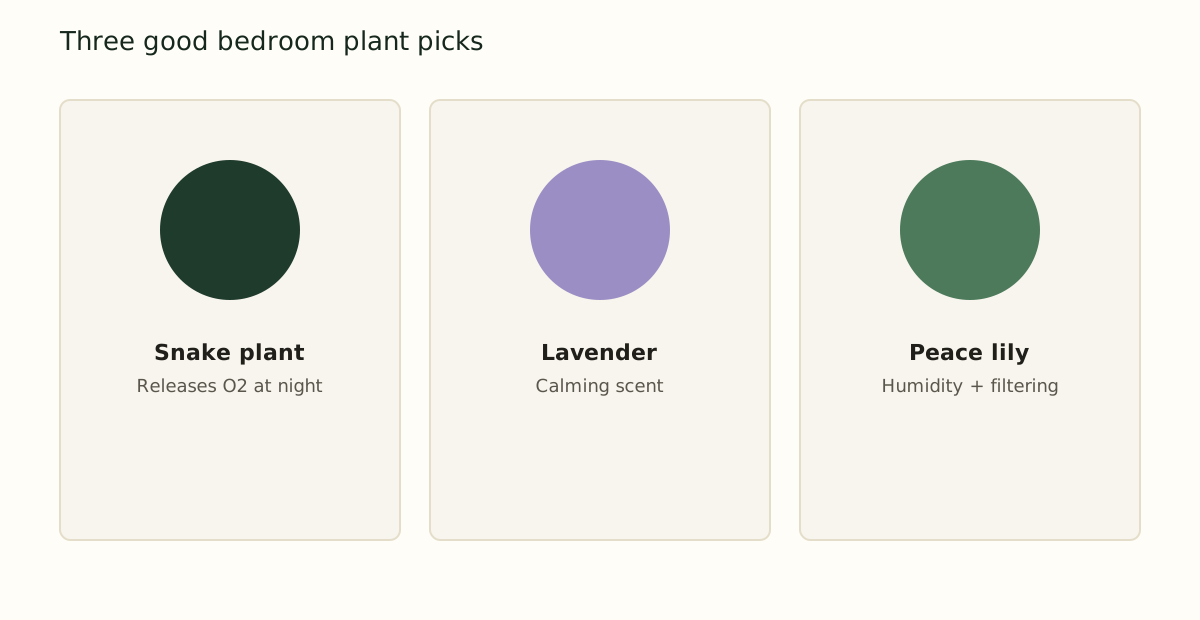
| Plant | Why it fits a bedroom | Care level |
|---|---|---|
| Snake plant | Tolerates the often-lower light of a bedroom; nighttime CAM photosynthesis | Very easy |
| Lavender | Mild, calming scent associated with relaxation in some studies | Moderate — needs bright light |
| Peace lily | Contributes humidity; attractive, calming foliage | Moderate |
| Pothos | Tolerant, trailing habit works well on a shelf above a headboard | Easy |
| ZZ plant | Extremely low-maintenance for a spot you may not think about daily | Very easy |
Note that lavender, unlike the other plants on this list, needs considerably more direct light than a typical bedroom provides unless the room has a genuinely bright, sunny window — it's included because of its popular association with calm and sleep, but it's a poor low-light choice compared to the other options if your bedroom is dim.
A closer look at each pick
Snake plant is arguably the single most recommended bedroom plant across gardening media, for reasons that hold up under scrutiny even after setting aside the exaggerated air-purification framing: it genuinely tolerates the lower light common in many bedrooms, needs infrequent watering that suits a room you might not think to check daily, and its CAM photosynthesis means what small amount of gas exchange does happen at night trends toward oxygen release rather than absorption.
Lavender is included specifically for its popular association with calm and sleep support, backed by some, though not universally conclusive, research on its scent's effect on relaxation. It genuinely needs much brighter light than the other plants on this list to thrive, so it's a better fit for a bedroom with a large, sunny window than a dim interior room, where it will likely stretch and decline over time regardless of watering care.
Peace lily contributes a modest amount of humidity to a room through transpiration and offers attractive, calming foliage with occasional white blooms in good light. It needs more frequent watering than snake plant or ZZ plant, so it's a better fit for someone who genuinely enjoys the daily ritual of checking on it rather than someone who wants the lowest possible bedroom maintenance.
Pothos works particularly well trained along a shelf or trailing from a high spot above a headboard, adding visual greenery without taking up nightstand or floor space, and it tolerates the range of light conditions typical of most bedrooms reasonably well.
ZZ plant is close to snake plant in overall bedroom suitability — extremely tolerant of low light and infrequent watering — making it a genuinely low-effort choice for a room that, for many people, gets less daily attention than a kitchen or living room simply because of how bedrooms are used.
Scent, visual calm, and the psychological effect
Separate from air chemistry, there's reasonably solid research supporting a psychological benefit to having plants in living spaces generally, including bedrooms — visible greenery is associated with modestly lower reported stress and a greater sense of calm in several studies on biophilic design (the broader idea that human wellbeing benefits from proximity to natural elements, a concept that extends well beyond houseplants to include natural light, views of nature, and organic materials in interior design). Lavender specifically has some research support for a mild calming or sleep-supportive scent effect, though results vary between studies and individuals, and this is a genuinely different mechanism than any air-purification claim — it's about the psychological and possibly aromatic effect of the plant's presence, not a chemical change in the room's air composition.
Practical placement tips
- Keep plants a reasonable distance from the bed itself if you have any known plant allergies or mold sensitivity, since consistently damp potting soil can occasionally support mold growth in humid climates or poorly ventilated rooms.
- Choose lower-maintenance plants for the bedroom specifically, since it's a room many people check on less frequently during the day than a kitchen or living room, making forgiving, low-light-tolerant species a practical fit.
- Avoid overwatering in a room that may get checked less often — pair any bedroom plant with the soil-check method from our watering guide rather than a fixed schedule you might forget.
- Consider a nightstand-height plant as a genuinely practical spot — close enough to notice and enjoy, without taking up floor space in a room that's often smaller than others in the home.
What to avoid in a bedroom specifically
Beyond general toxicity concerns covered in our toxic plants guide for pet owners, a bedroom is worth being slightly more cautious about strongly scented plants if you're sensitive to fragrance, since a small bedroom concentrates scent more than a larger, better-ventilated living space with more air exchange. If you have known plant-related allergies, introduce any new bedroom plant gradually and monitor for symptoms before committing to a larger collection in a room where you spend roughly a third of your day, often with the door closed and less airflow than the rest of the home.