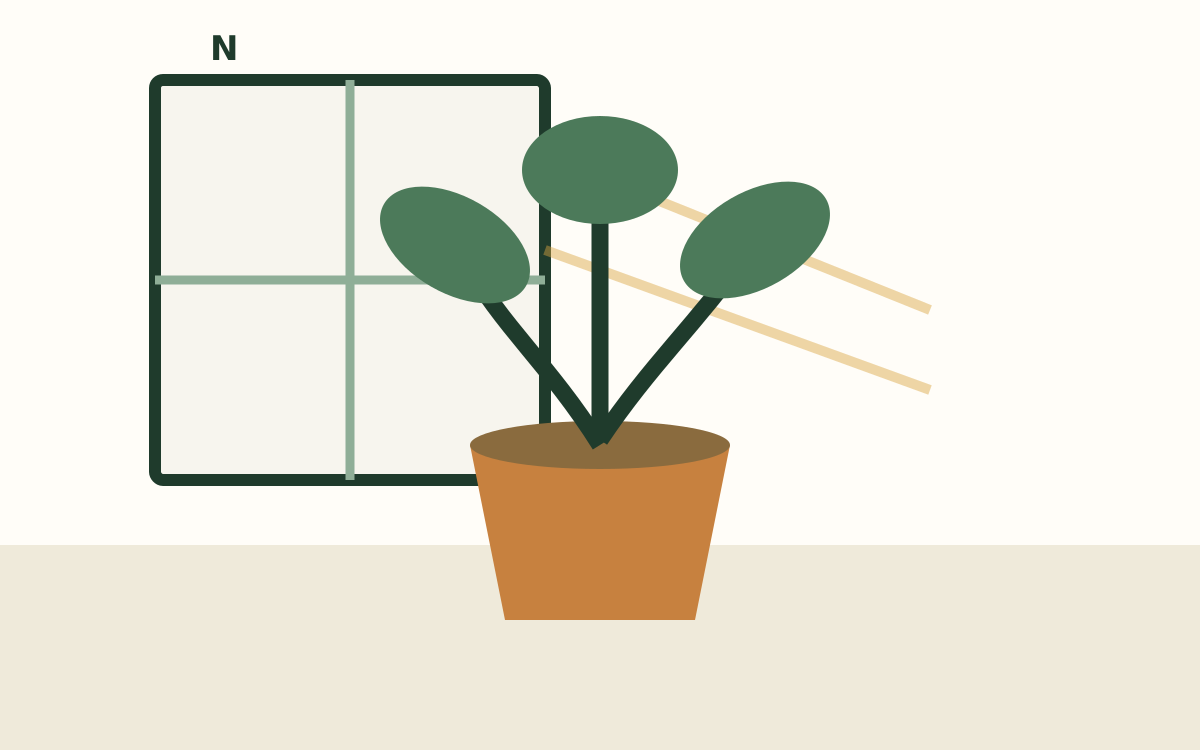
First confirm what north-facing means where you live
In the Northern Hemisphere, a north-facing window generally receives less direct sun than south-facing windows because it faces away from the sun's main path. It often provides softer, indirect light that can suit shade-tolerant foliage plants close to the glass. In the Southern Hemisphere, the broad relationship reverses: north-facing windows can be among the brighter exposures.
Near the equator, seasonal sun angles and local building orientation make simple northern-versus-southern rules less reliable. High latitudes also experience dramatic day-length changes. Always combine compass direction with direct observation instead of copying placement advice written for another hemisphere.
Use a phone compass away from magnetic interference or check the building plan, then observe when direct sun enters the room across several days. Direction narrows the possibilities; it does not tell you how much light reaches a leaf.
The variables that can transform the window
A large unobstructed north window facing open sky may provide more useful light than a small brighter-facing window blocked by a neighboring wall. Balconies, deep eaves, insect screens, tinted or frosted glass, trees, curtains, and dirt on the glass all reduce or redirect light. Snow or pale exterior surfaces can increase reflected brightness seasonally.
Window depth matters. A plant set on the sill may receive much more than one on a table several feet into the room. Light drops with distance and spreads unevenly, so “in a north-facing room” is not a useful placement description. Measure from the glass to the leaves and note whether the plant sits to the side of the opening.
Clean the window and suitable plant leaves before concluding that the exposure is inadequate. Use the tests in our room-by-room light guide at the exact plant position and time of day.
Map three practical placement zones
Window zone: the sill or a stand directly beside unobstructed glass usually offers the strongest available light. Check leaf temperature and winter glass contact. Near-window zone: roughly within the first few feet can suit many tolerant foliage plants when the window is reasonably large and open.
Interior zone: farther into the room, useful light may fall below what even a “low-light” plant needs for steady growth. Bright walls can make this area look comfortable to people without supplying enough intensity at leaf level. Treat the interior as a separate measurement rather than an extension of the window.
These are observation zones, not guaranteed distances. A phone light app can help compare positions consistently, though consumer sensors are not laboratory instruments. A plant-oriented light meter gives stronger evidence when placement decisions matter.
Choose plants by useful traits
Good candidates tolerate lower indirect light, grow at a rate appropriate to the space, and do not require rapid soil drying. Pothos, heartleaf philodendron, cast-iron plants, some ferns, prayer-plant relatives, snake plants, and ZZ plants are commonly considered, but their pet toxicity, moisture preference, and minimum light differ.
Low-light tolerance does not mean no-light growth. A tolerant plant may survive while producing smaller leaves, longer internodes, or little new growth. Variegated plants often need more light to maintain patterned growth because green tissue performs most photosynthesis. A highly variegated specimen may be a poor choice for a dim interior even when the all-green form is tolerant.
Verify the exact species and pet-safety status before purchase. Several famous low-light plants are toxic when chewed. Use our pet-safe guide and an authoritative current toxicity database.
Expect slower drying and adjust watering
Lower light usually reduces growth and water use. A plant close to a north window may therefore stay moist longer than the same species in a brighter exposure. Watering on the brighter plant's schedule creates prolonged wetness, fungus gnat habitat, and root stress.
Check soil below the surface and pot weight before watering. Use a draining container and empty runoff from the cachepot. Do not compensate for low light by giving tiny frequent sips; that can keep the surface damp without wetting the root ball evenly.
Seasonal changes can slow drying further. Track dates only to reveal a pattern, and use our watering guide to make the decision from current soil conditions.
Reassess through the seasons
In the Northern Hemisphere, winter brings shorter days and a lower sun angle. Some north-facing windows receive very little useful light during this period, while deciduous trees outside may lose leaves and remove one source of shade. Summer brings longer days but can add dense tree cover.
Photograph the room at the same time of day every few months and note how long the brightest period lasts. Move a light-demanding plant closer, reduce watering as drying slows, or add measured artificial light. Avoid relocating every plant based only on the month; observe the actual exposure.
Keep leaves from touching cold glass and protect the pot from drafts. A window can provide acceptable light while the immediate temperature is unsuitable. Read our winter-care guide for combined seasonal adjustments.
When to add a grow light
Add supplemental light when the desired plant cannot maintain healthy growth at the best safe natural position, or when shelves and furniture must remain farther from the window. A fixture is also useful for winter consistency and propagation. It should solve a measured limitation rather than act as decoration.
Choose credible output and coverage information, mount the fixture securely, use a timer, provide a dark period, and acclimate plants gradually. Additional light may increase water use, so the old schedule will need reevaluation. Follow our grow-light guide for placement and electrical safety.
Do not place cords where runoff can reach them or where pets can chew them. If a safe fixture cannot be installed, choose a more tolerant plant or a brighter room instead of accepting a hazardous setup.
Rotation, cleaning, and balanced growth
Plants often orient leaves toward a one-sided window. Rotate the pot a quarter turn periodically when the species and growth habit benefit, but do not spin it daily. Climbing plants attached to a pole may be intentionally oriented, and turning the support away from light can produce awkward leaf positions.
Clean dust from suitable smooth leaves because it further reduces light reaching the surface. Use water and a soft cloth, not shine products, following our leaf-cleaning guide. Keep curtains from repeatedly striking stems.
If growth remains strongly one-sided, increase the usable light or reposition the plant before pruning. Cutting stretched growth without correcting the light generally produces another stretched cycle.
Work around curtains, privacy, and cold glass
Sheer curtains, blinds, privacy film, and insect screens can materially reduce the light reaching a north-window plant. Measure with the treatment in its normal daytime position rather than pulling it aside only for the test. If privacy must be maintained, place the plant as close as safely practical, choose a more tolerant species, or supplement it instead of relying on a routine that household members will not maintain.
Leave enough room to open curtains and clean glass without crushing leaves. Water spots, wet moss poles, and terracotta can mark sills, so use a stable waterproof tray and inspect beneath it. Avoid placing pots on radiators or balancing them on narrow ledges. The combined wet weight may exceed what a small shelf or adhesive bracket supports.
Cold air can pool near older windows even when room temperature seems comfortable. Keep leaves from touching glass, check for drafts at pot height, and move sensitive plants slightly inward during severe weather—while recognizing that this also reduces light. A secure insulated stand or safe supplemental light may solve the tradeoff better than repeated daily moves.
Evaluate success from new growth
Record the starting position, season, and a photograph. Watch internode spacing, new-leaf size, color, orientation, and the drying cycle. Healthy but slow growth can be acceptable for a shade-tolerant plant; continued stretching, declining leaf size, loss of variegation, or repeated wetness indicates the placement needs adjustment.
Old leaves damaged elsewhere will not become perfect at the north window. Judge whether new damage stops and new growth is proportionate. If leaves yellow, consider water, roots, temperature, pests, and natural aging rather than diagnosing light alone.
The best plant is one whose verified needs match the specific window and household. If the space cannot meet those needs safely, changing the plant choice is better than keeping a struggling specimen for the sake of a design plan.